The short answer for Tampa Bay homes
On a typical Wesley Chapel house, a quality 100% acrylic paint applied over properly cleaned and primed stucco lasts about 7 to 10 years before it looks tired. A cheaper paint, or a good paint put on too thin, often shows its age in 4 to 6 years. Trim, fascia, front doors and garage doors usually need attention sooner, somewhere around 3 to 6 years, because they take more sun and more water.
Those numbers are shorter than what you read on the label. Paint makers test in many climates, and their lifetime figures assume moderate sun and a dry season that actually dries things out. Here we get strong UV most of the year, a rainy season from roughly June through September, and humidity that keeps walls damp into midmorning. That combination is hard on any coating.
What wears paint out here
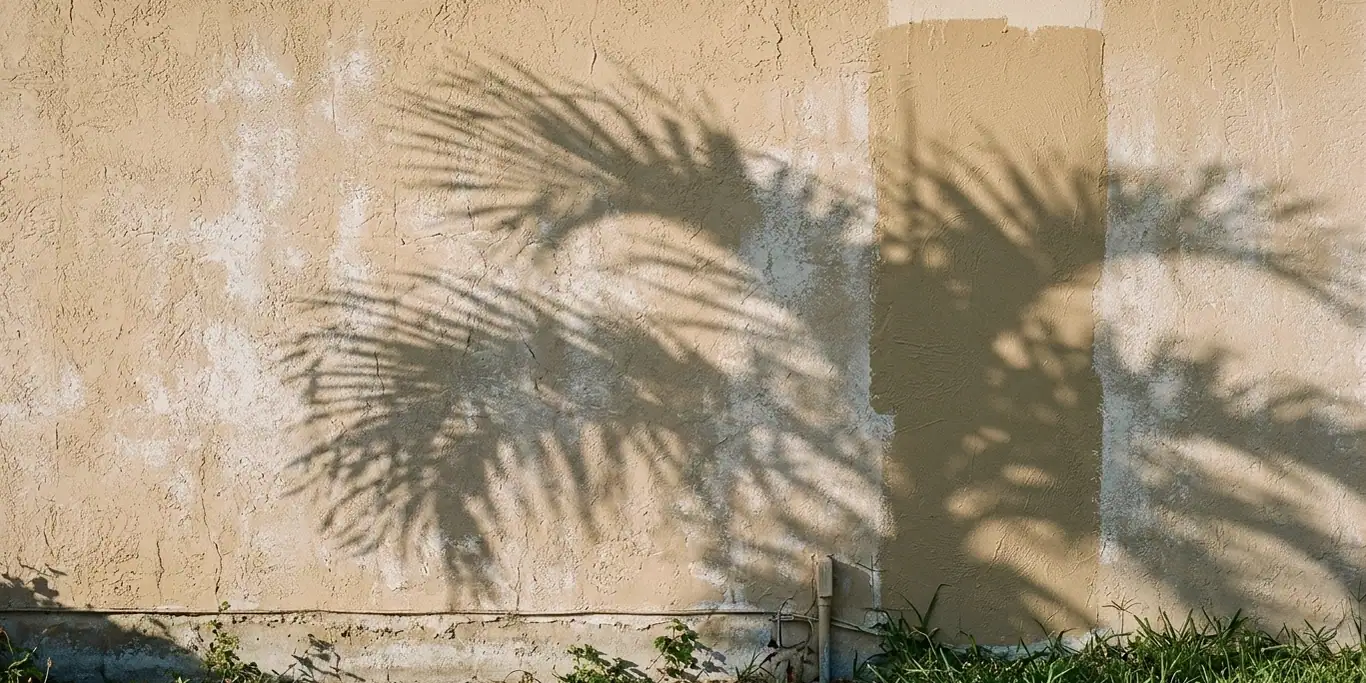
Sun is the biggest factor. UV breaks down the binder in paint, the part that holds the color and keeps the film flexible. Once the binder goes, the pigment sits loose on the surface as a fine powder. That is chalking, and it is the first real sign of age on most Florida homes.
Rain and irrigation come next. Our afternoon storms hit the same walls over and over, and sprinkler heads set too close to the house spray the bottom two feet of stucco almost every day. That constant wetting feeds mildew and pushes paint to blister and peel near the slab.
Stucco itself plays a part. It is porous and slightly alkaline, it moves a little with heat, and it develops hairline cracks over time. Water gets into those cracks, sits behind the paint and lifts it from the inside. A wall with lots of small cracks that were never filled will fail faster than a smooth, sealed one.
Why the sides of your house age differently
Walk around your house and you will often see what looks like three different paint jobs. That is normal in Florida, and knowing the pattern helps you decide what to paint and when.
- West and south walls take the most direct sun. They fade and chalk first, sometimes two or three years ahead of the rest of the house.
- North walls stay shaded and damp. The color holds, but mildew and green algae show up early, especially behind shrubs.
- East walls get morning sun and dry out fastest after dew. They usually hold up best.
- Areas under the lanai or overhangs are protected and can look nearly new after a decade, which makes the exposed walls look worse by comparison.
Signs it is time to repaint
You do not need to wait for peeling. Repainting a little early costs less, because the crew spends less time scraping, patching and priming. Watch for these:
- Rub a dark cloth on a sunny wall. If it comes away coated in color, the paint is chalking heavily.
- Color looks blotchy or noticeably lighter on one side of the house.
- Hairline cracks in the stucco have grown or multiplied, especially at window and door corners.
- Caulk around windows, doors and trim is shrinking, cracking or pulling away.
- Paint is bubbling or flaking along the bottom of walls near sprinklers or downspouts.
- Fascia boards and trim show bare wood or soft spots.
- Mildew comes back within weeks of being washed off.
How to get more years from your next paint job
Most of the life of an exterior paint job is decided before the first coat goes on. Washing matters: chalk, dirt and mildew all have to come off, or the new paint bonds to the dust instead of the wall. Drying matters too. Stucco holds water, and painting a wall that still feels cool and damp is one of the most common reasons we see early failure.
Crack repair and caulking come next. Small cracks should be filled with a flexible patch or bridged with a high-build coating, and every window and door joint should get fresh caulk. On walls with a lot of hairline cracking, many homeowners choose an elastomeric wall coating on the sunny sides for extra film thickness.
Finally, the paint itself. Two full coats of a good 100% acrylic, applied at the coverage rate on the label, will outlast one heavy coat every time. Ask any painter how many gallons they plan to use. On a 2,000 square foot single-story stucco home, a proper two-coat job usually takes somewhere around 22 to 32 gallons for the walls alone, depending on texture.
What a repaint costs and when to book it
For a single-story stucco home in Wesley Chapel, a full exterior repaint with washing, crack filling, caulking and two coats generally runs about $3,860 to $6,940. Two-story homes and houses with lots of trim, shutters or fiber cement on the upper floor land higher. The final price always follows a free on-site look, because texture, height and repair work vary so much from house to house.
The best window for exterior work is our dry season, roughly October through May, when walls dry faster and storms are less likely to wash out a fresh coat. If you are noticing heavy chalking or peeling now, call (813) 471-5995 and we will walk the house with you, point out which sides need it most, and give you a written estimate.