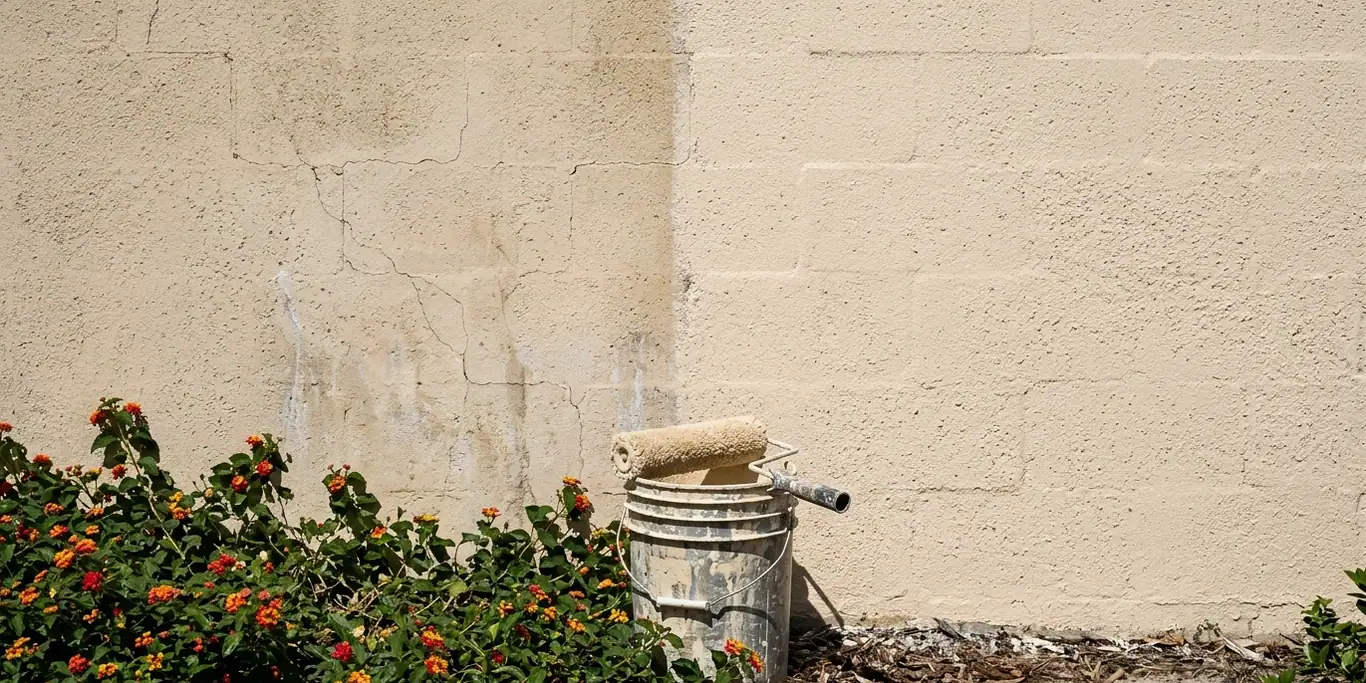
How stucco differs from other walls
Stucco is a cement plaster about three eighths to seven eighths of an inch thick, applied directly over the block on most local homes. It soaks up water, dries out again, and moves slightly as it heats and cools. Paint on stucco has to let moisture vapor pass through, or it blisters off from behind.
Fresh stucco is also very alkaline, which can burn the binder in regular paint and leave it pale and blotchy. On new patches, or homes where the stucco has never been painted, we use a masonry conditioner or an alkali-resistant primer first.
Textures and how we roll them
Most houses here have a sand finish, a light lace or a knockdown texture. Each holds paint differently. Deep textures need a thick roller nap, three quarter inch to an inch and a quarter, and the paint has to be worked into the valleys, not just across the peaks. We often spray first and back-roll right behind it, which pushes paint into every pocket.
Thin, sprayed-only coats look fine when the job is new and fail early, because the peaks wear through to the old color within a few summers.
Corners, window returns and the band around the garage door are brushed and rolled by hand, since a sprayer alone leaves thin spots where two planes meet. Those edges are also where water runs off the wall, so they get extra attention.

Cracks before color
Hairline cracks smaller than a credit card edge are normal on Florida stucco, especially around windows and at the corners of the block. We fill them with an elastomeric patch that stretches, and texture the patch so it blends. Wider cracks, hollow-sounding areas and stucco pulling away from the wall are structural to the finish and need stucco repair before any paint goes on.
If your walls have many hairline cracks, a thicker elastomeric wall coating might be the better choice than standard paint.
Paint products for local stucco
What we put on a stucco wall depends on the condition of what is there now.
- Sound, chalky paint: wash, then a bonding masonry primer.
- Good paint, color change: two coats of exterior acrylic.
- New patches: alkali-resistant primer, then finish.
- Many hairline cracks: elastomeric patch, or a full elastomeric coat.
Call us when you notice
- Stucco paint rubs off as white chalk
- Hairline cracks spider out from window corners
- Bubbles or blisters in the paint after rain
- Old stucco patches show as different colored squares
- Peaks of the texture show the old color through
How a stucco painting job runs
Tap and inspect
We check walls for cracks and hollow spots by tapping, and mark anything needing repair.
Wash the walls
Chalk, dirt and algae come off with a pressure wash and cleaner.
Patch cracks
Cracks are filled with an elastomeric patch and textured to match.
Prime where needed
Chalky areas and new patches get a masonry primer.
Spray and back-roll
Two coats go on, sprayed and rolled into the texture.