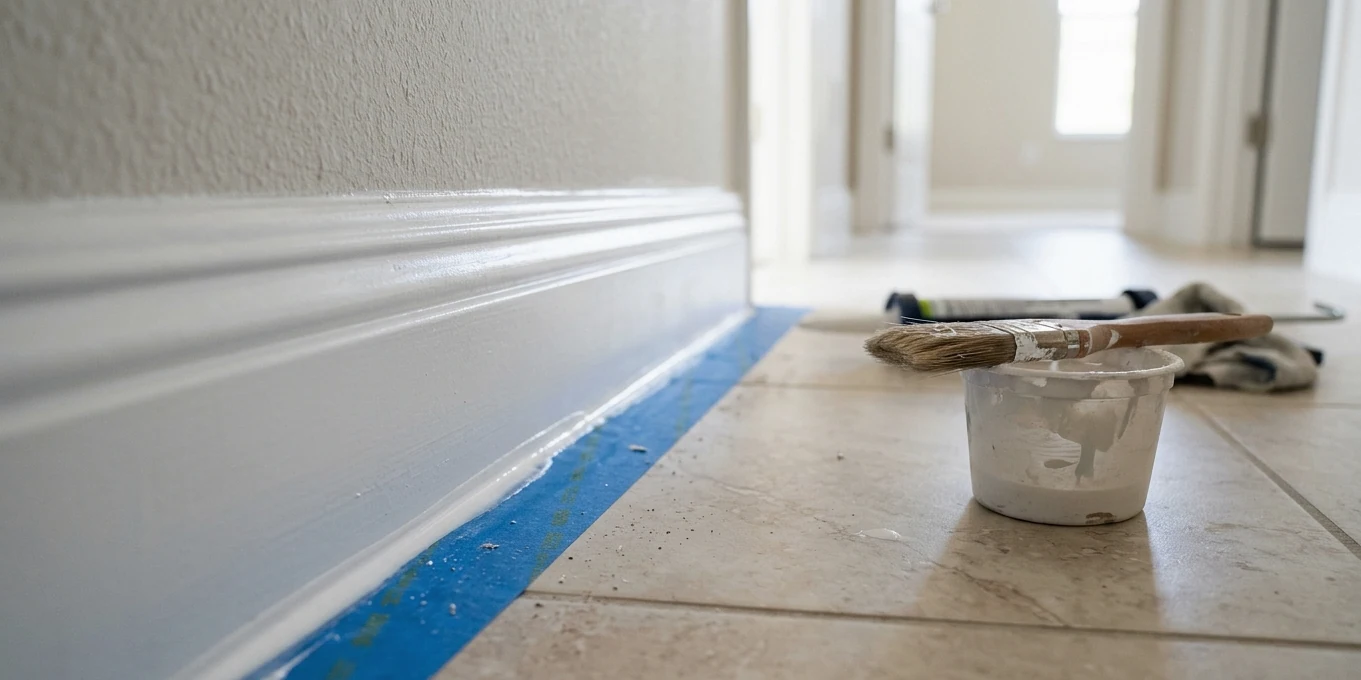
The tile floor problem
Nearly every home in Pasco County has tile or vinyl plank on the main floor, and baseboards sit right on it. Mop water wicks into the bottom edge of MDF baseboard, which swells and leaves a fuzzy, chipped line along the floor. We sand that edge, seal it with primer, and paint a clean line without getting paint into the grout.
If the swelling has gone soft or the board is cracked, painting will not save it. We replace those runs with new primed boards through our baseboard and trim installation work, then paint them with the rest.
Caulk is half the job
Builder trim goes up with a fast bead of caulk, and as the house settles in its first few years, that caulk splits along the top of the baseboard and the corners of casings. The gap fills with dust and looks like a dark line. We cut out failed caulk, run a new paintable bead, and tool it smooth before painting.
Trim painted without fixing these gaps looks good for a month and then the line opens back up.
Sheen and color for trim
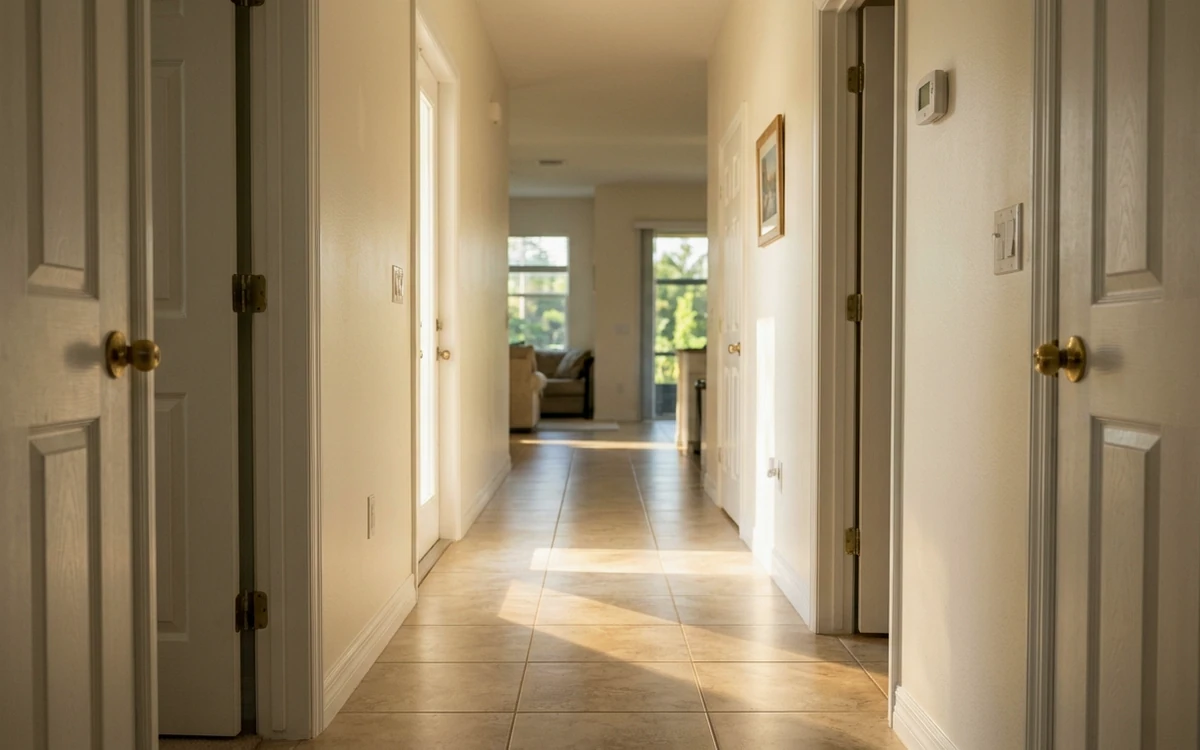
Trim needs to be harder than the wall paint around it. Here is what we typically recommend:
- Semi-gloss waterborne enamel for most homes, easy to wipe and slow to yellow.
- Satin trim for a softer, modern look, especially next to matte walls.
- A pure white or a white matched to your cabinets so the house reads as one color.
- Dark trim and doors if you want contrast, which needs an extra coat to cover.
Windows, sills and stair stringers
Window sills take direct sun and condensation, so the paint there cracks before anywhere else. We sand back to sound paint and spot prime any bare wood. Stair skirt boards collect shoe scuffs and get the same hard enamel. Door casings are included, and the doors themselves can be added through our interior door painting service in the same visit.
Crown molding, chair rail and shoe molding along tile get the same treatment. Shoe molding in particular collects mop water and pet hair, so we caulk its top edge and finish it in the same enamel as the baseboard above it.
Call us when you notice
- Bottom edge of baseboard is swollen or fuzzy from mopping
- Dark gaps between baseboard and wall
- Yellowed trim next to bright new walls
- Window sills cracked or peeling from sun
- Scuffs on stair skirt boards that will not wipe off
How a trim & baseboard painting job runs
Measure and mark repairs
We count linear feet and mark boards that need replacing rather than painting.
Clean and sand
Trim is degreased and scuff sanded so the new enamel grips the old paint.
Recaulk
Failed caulk is cut out and new bead is run and tooled at every joint.
Tape the floor and paint
Grout lines and flooring are taped, then trim gets two coats of enamel.
Pull tape at the right time
Tape comes off while the paint is still slightly soft so the edge stays clean.