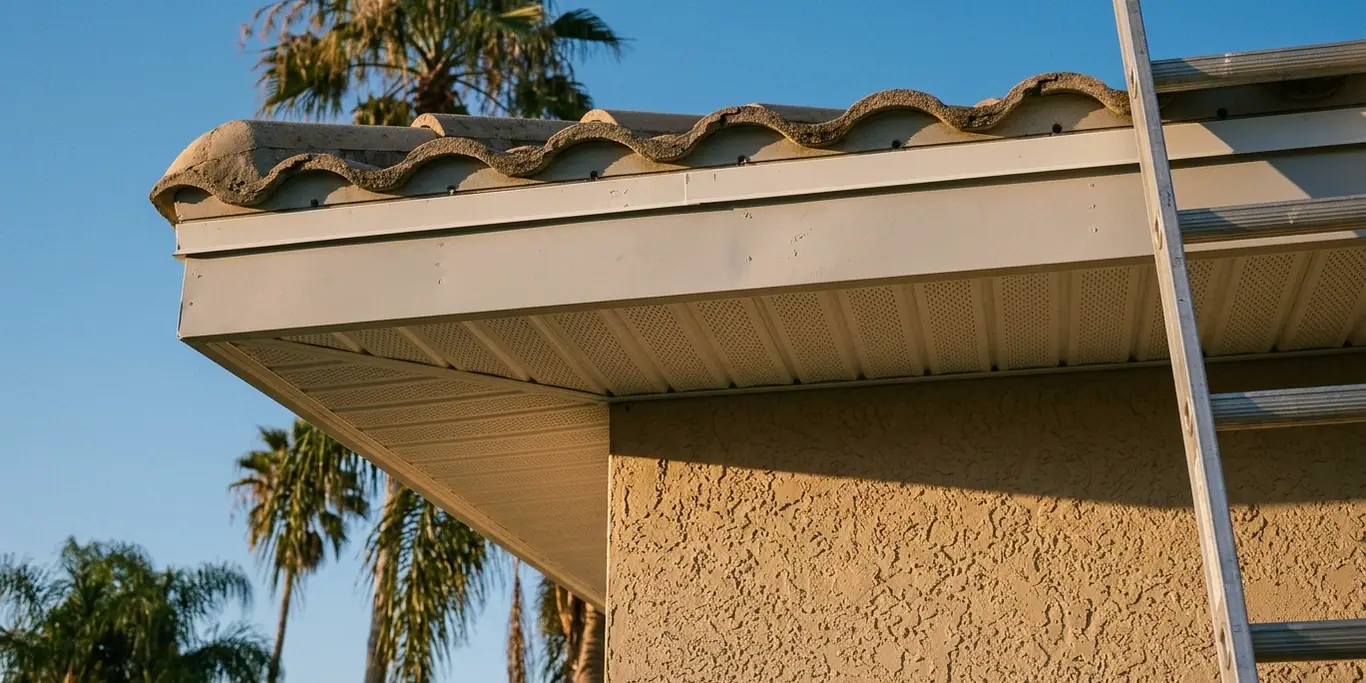
How the eave is built
Fascia is the board along the edge of the roof where gutters attach. Soffit is the underside of the overhang, connecting the fascia back to the wall. On most homes in Pasco County, the fascia is wood, often 1 by 6 or 2 by 6, sometimes wrapped in aluminum, and the soffit is vented vinyl or aluminum panels that let air into the attic. Some older homes have solid painted plywood soffit with small round or strip vents.
Common failures we repair
The usual problems are easy to spot from the driveway if you know where to look.
- Rot at fascia ends below roof valleys and where gutters are missing, because roof water pours over the same spot.
- Sagging soffit, where panels slipped out of the channel or the nailing strip let go.
- Storm damage from tropical storms and summer gusts that pull loose panels off.
- Animal entry, where squirrels, rats or birds push through a weak panel or a gap at the corner.
- Wrap failure, where aluminum fascia covering hides wood that has quietly gone soft beneath it.
Keeping the attic breathing
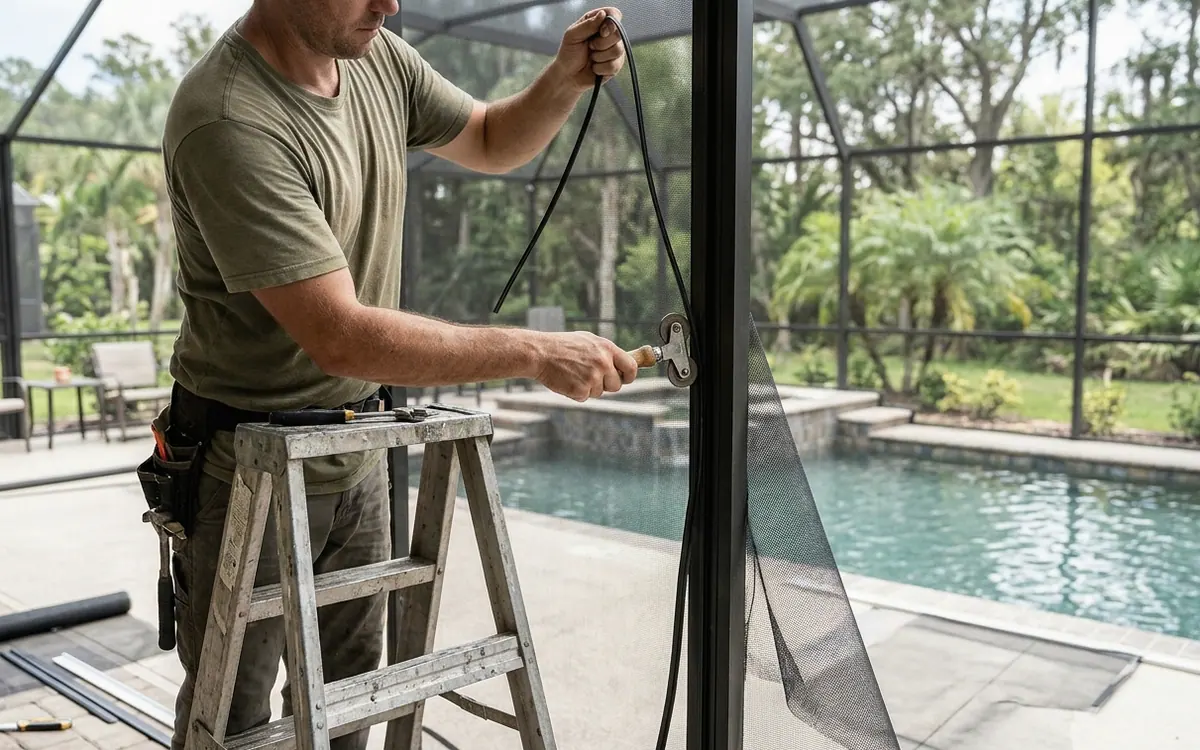
Vented soffit is the intake for attic airflow. In a Florida summer an attic can run well past 130 degrees, and blocked intake makes the AC work harder. When we replace soffit, we use vented panels where the original had them and check that insulation is not stuffed against the vents from the attic side. If a past repair used solid panels across a run that should be vented, we tell you and swap them.
Repair work done right
Rotted fascia gets cut back to sound wood and replaced with primed wood or PVC fascia board, joined with scarf cuts over a rafter tail so the seam holds. We fix the drip edge if it was bent, rehang gutters on solid wood, and paint the new boards. On tile roofs we work carefully at the edge so we do not crack the bird stop or the first course of tiles.
If the fascia is fine but the paint is gone, a coat as part of exterior painting may be all you need. If soft wood shows up around nearby door frames or trim too, we cover that under wood rot repair during the same visit.
Call us when you notice
- Gutters are pulling away from the roof edge
- Soffit panels droop or have fallen out
- Paint is peeling and the fascia feels soft
- You hear scratching in the attic near the eaves
- A storm left gaps or loose panels at the overhang
How a soffit & fascia repair job runs
Inspect from the ladder
We check fascia with a probe, look behind any aluminum wrap and test soffit for sag and gaps.
Remove damaged sections
Gutters are detached where needed, and soft fascia and broken soffit are taken out.
Install new material
New fascia is scarfed in over rafter tails, and vented soffit is set into new channels.
Seal and secure
Gaps at corners and walls are closed and gutters rehung on solid wood.
Paint and clean up
New wood is primed and painted, and debris from the eave is cleared from beds and lanai.