When elastomeric makes sense
It is not the answer for every house. We usually recommend it when one or more of these is true:
- Many hairline cracks across walls, not just a few near windows.
- Water stains inside on block walls after wind-driven storms.
- An older home where repeated patching shows through paint.
- A west or south wall that takes the brunt of summer rain.
How it works
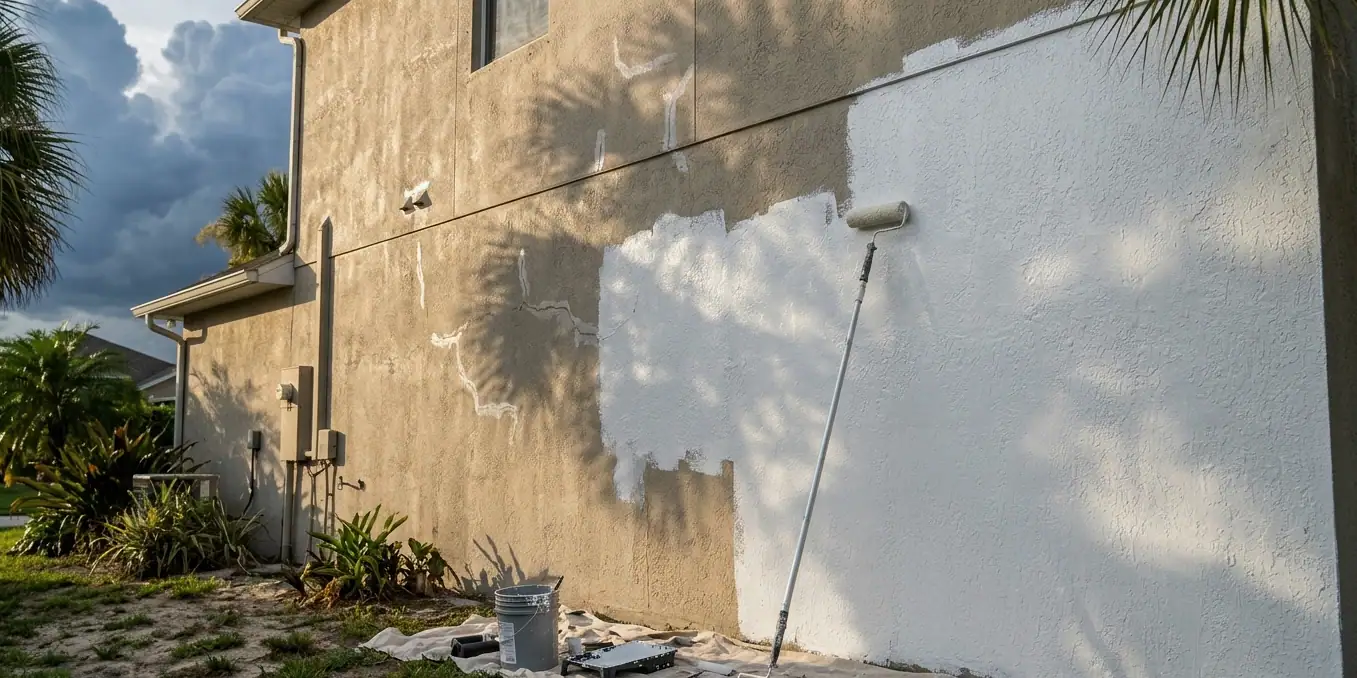
Standard exterior paint dries to around two to four mils thick. Elastomeric goes on at ten to twenty mils dry, in two heavy coats. The film can stretch over a hairline crack as the wall moves, instead of cracking with it. That thickness also keeps out the rain that gets pushed sideways during a summer squall or a tropical storm.
The tradeoff is that it breathes less than paint. If the wall already has moisture trapped in it, a thick coating can hold that moisture and blister. We check for wet walls with a moisture meter and make sure the source is dealt with before coating.
Because it is so thick, elastomeric also fills small pinholes and voids in rough stucco, which gives the wall a more even look than paint alone. Coverage drops to roughly a third of what standard paint covers per gallon, so material is a bigger share of the price.
Prep is what makes it last
Elastomeric will not stick to chalk or dirt. Walls are pressure washed and given a full day or two to dry. Cracks wider than a sixteenth of an inch are filled with an elastomeric patch first, since the coating can only bridge small ones. Chalky old paint gets a masonry primer. Windows and door frames are caulked so water does not get in around them.
If the stucco itself is loose or hollow, coating over it traps the problem. Those areas get cut out and patched by our stucco repair crew first.
Colors, sheen and HOA approval
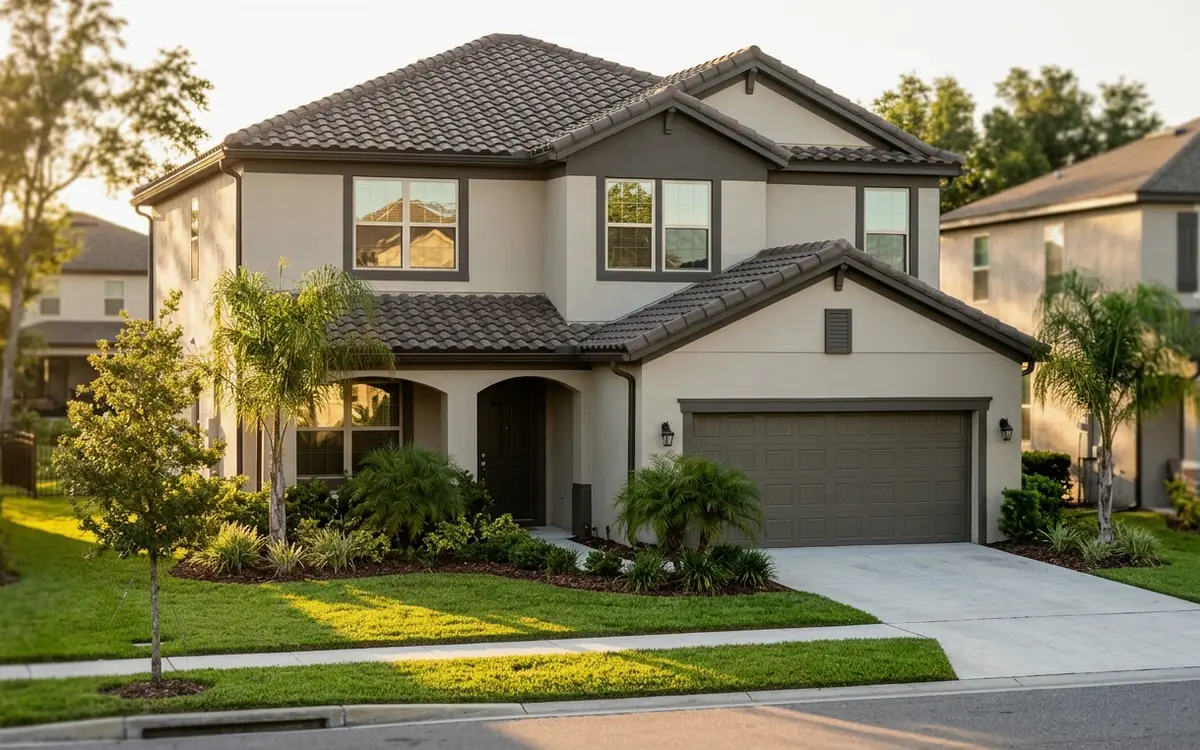
Elastomeric comes in most standard exterior colors, though very deep shades are limited by the base. It has a soft satin look that is close to a regular flat or satin exterior paint. Most HOAs treat it the same as paint for approval, since they care about the color, not the product. Light colors also keep the wall cooler in the Florida sun, which helps the coating last.
Not sure it is right for your house? A standard stucco paint job may be enough, and we will say so if it is.
Call us when you notice
- Dozens of hairline cracks on one or more walls
- Water stains on interior block walls after storms
- Old crack patches showing through the paint
- Paint failing early on the west side
- You want the longest-lasting exterior coat
How a elastomeric wall coating job runs
Moisture check
We meter the walls for trapped moisture and look for active leaks before coating.
Wash and dry
Walls are pressure washed and left to dry for at least a full day.
Fill wide cracks
Cracks over a sixteenth of an inch are filled with elastomeric patch.
Prime chalky areas
A masonry primer goes on anywhere the old paint is powdery.
Apply two heavy coats
The coating is sprayed and back-rolled at the full thickness the product calls for.