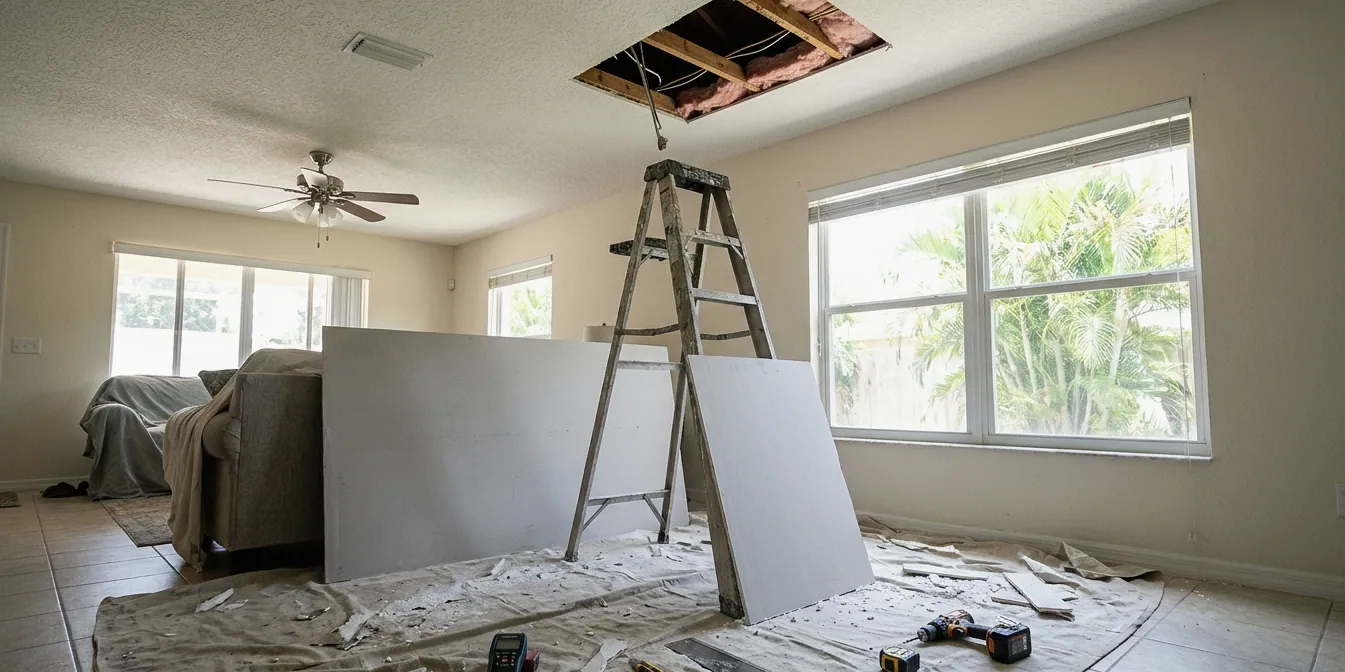
Where the water usually comes from
Most water stains we repair in Wesley Chapel trace to a few sources. Attic AC air handlers drip from clogged condensate lines or rusted drain pans, which is why stains often appear in hallway ceilings near the unit. Roof leaks show up after the summer storms and hurricane season wind-driven rain. Plumbing leaks from second-floor bathrooms and water heaters soak ceilings below. Sliding door and window leaks wick into the drywall beside them.
We repair the drywall and paint. The source has to be fixed first by the right pro, whether that is an AC tech, a roofer or a plumber, or the same stain will be back after the next storm.
Wet, damaged or just stained
Not every stain means the board has to come out. We read the area with a moisture meter and press-test it. What we find decides the repair:
- Dry, firm, stained only: seal with a stain-blocking primer and repaint the ceiling or wall.
- Dry but sagging, crumbling or bubbled: cut out the damaged section and replace it.
- Still wet: wait or dry it out before any repair, because closing up wet drywall traps moisture.
- Musty smell, spotty growth or long-term wetness: the area may need mold remediation first, which we do not perform.
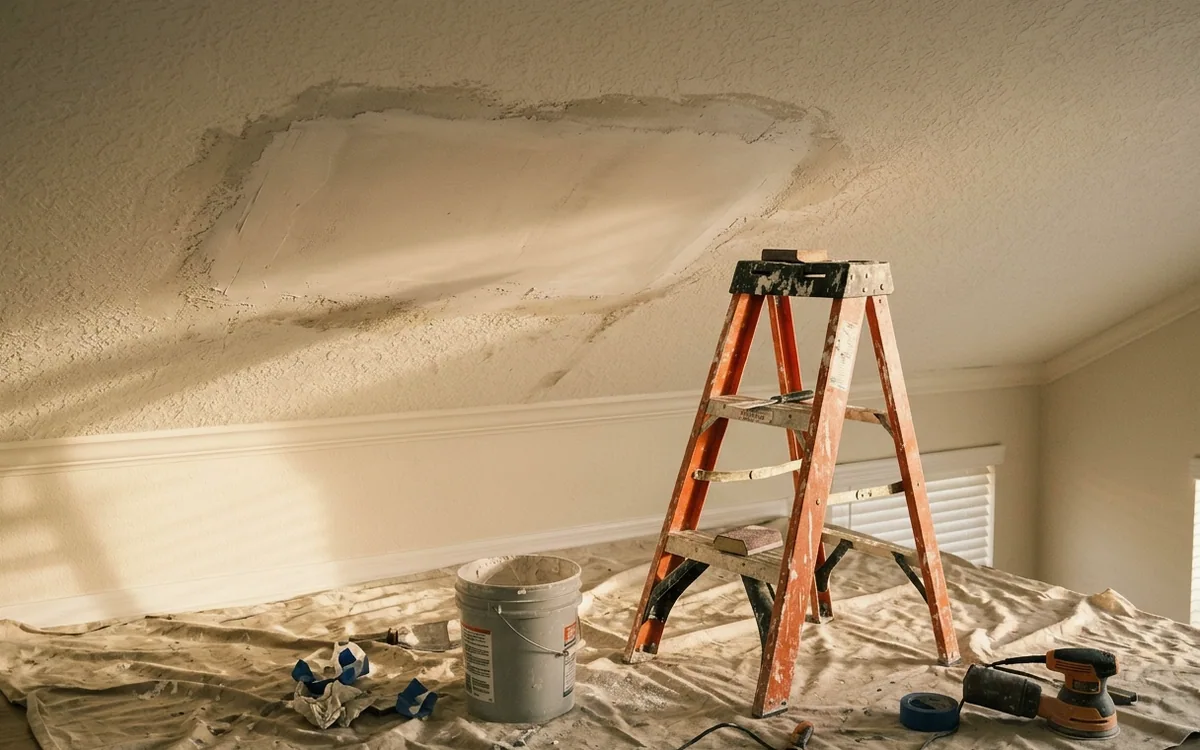
Insulation, framing and ceilings
Wet ceilings below an attic often have soaked insulation above them. When we open a ceiling, we pull out the wet insulation in that area and replace it once everything is dry. We also look at the framing. Ceiling joists and wall studs that got wet usually dry out fine, but if we find rot or soft wood, we tell you before closing it up.
Ceilings are the most common water repair, and they take care. Most Wesley Chapel ceilings have knockdown or a sprayed texture, and the patch has to match or it will show under every ceiling light. We retexture the repaired area, then repaint the full ceiling plane so the color and sheen are even.
Insurance claims
If you are filing a claim, take photos before anything is cut and keep any damaged material the adjuster asks to see. We can provide a written estimate broken out by line items, such as removal, drywall, texture, priming and painting, plus photos of the damage and the finished repair. Coverage decisions are between you and your insurer. If the wall paint around the repair is tired too, many owners add an interior repaint of the room on the same visit.
Call us when you notice
- A brown ring or yellow stain appeared on the ceiling.
- The ceiling sags or feels soft near the air handler.
- Paint is bubbling or peeling on a wall by a window.
- Baseboards are swollen after a leak or storm water.
- A musty smell lingers in one room after a leak.
How a water-damaged drywall & ceiling repair job runs
Confirm the leak is fixed
We check that the AC, roof or plumbing source has been repaired before we start.
Measure moisture
We read the drywall and framing with a moisture meter and map out how far the damage reaches.
Cut out and dry
Damaged board and wet insulation come out, and the cavity dries completely before closing.
Rebuild
New drywall goes in, gets taped and finished, and the texture is matched to the surrounding surface.
Seal and paint
Stain-blocking primer goes on, then the full ceiling or wall is painted to blend.