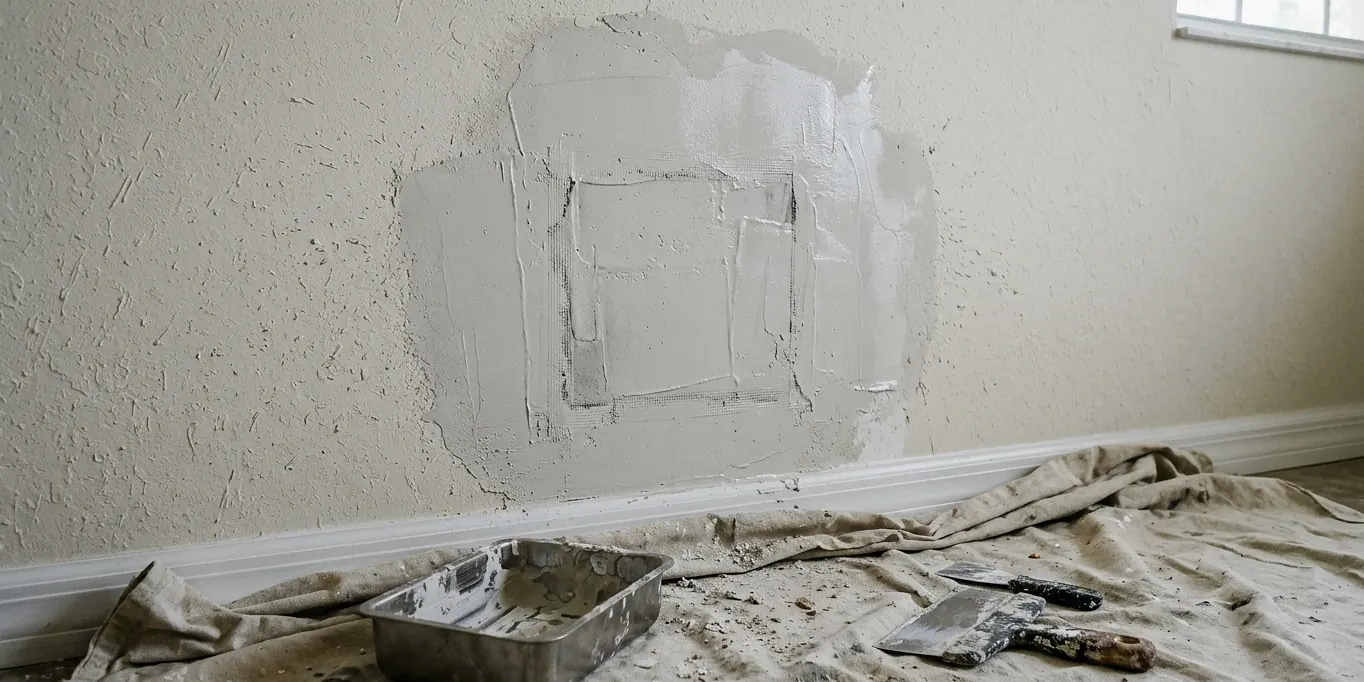
Small repairs we handle every week
Most of our drywall calls are small: a doorknob through the wall because a stopper went missing, holes left from a wall-mounted TV, a dent from moving furniture, a cable run that needed an access hole. These are quick for us and frustrating to do yourself, because the patch is the easy part. Making it invisible takes texture and paint.
- Doorknob and fist-sized holes, patched with a backed piece of drywall
- Anchor, toggle and TV mount holes filled flush
- Corner bead dents and cracked outside corners
- Access holes left after plumbing or electrical work
- Torn paper face from removed tape or wallpaper
Settling cracks and nail pops
Many Wesley Chapel homes are concrete block on the first floor and wood frame above, and the two materials move differently through humid summers and drier winters. That shows up as hairline cracks running off the corners of doors and windows, cracks where wall meets ceiling, and nail or screw heads pushing out in neat rows. New homes often show these in the first year or two as the framing dries out.
Caulk and paint over a moving crack just cracks again. We cut out the loose tape, set a screw on each side of a popped fastener, re-tape with mesh or paper and finish in thin coats. A crack that keeps widening, or one that runs diagonally through block walls, should be looked at by a structural pro before cosmetic repair.
Why most patches still show
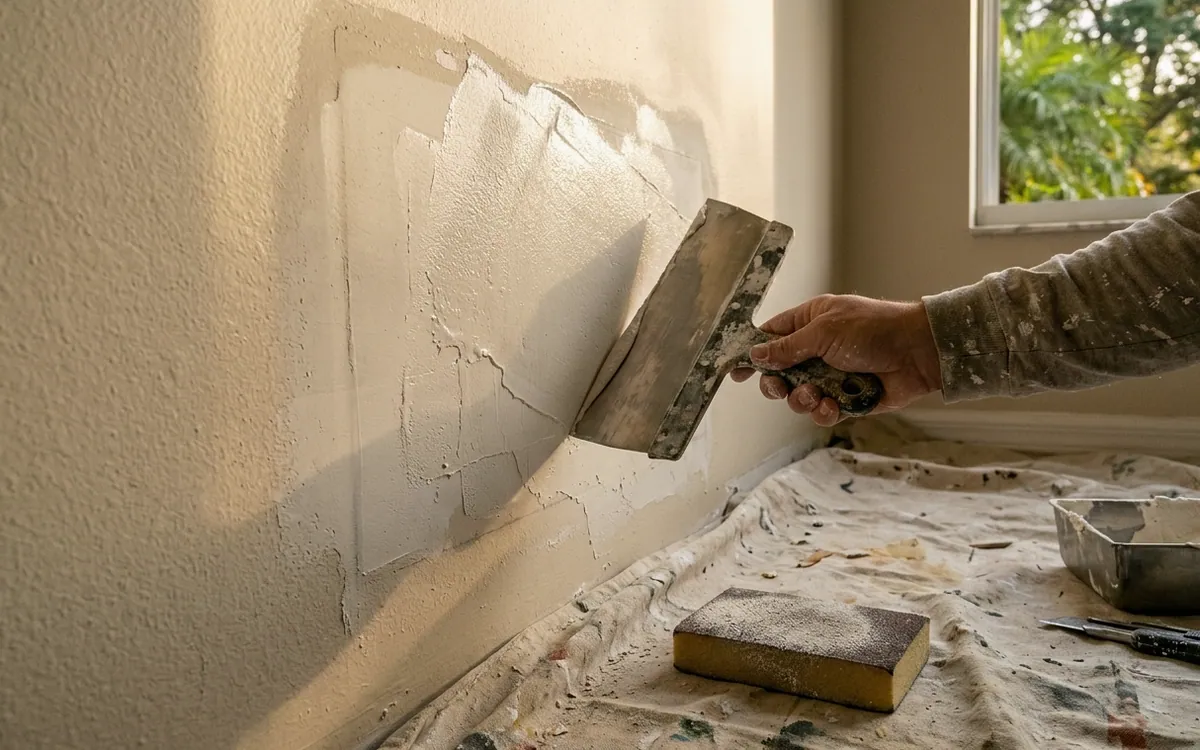
A patch shows for three reasons: it is raised above the wall, the texture is wrong or the paint does not match in color or sheen. We feather compound wide so there is no hump under raking light, then match the texture, from knockdown and orange peel to smooth Level 4 finishes. Texture matching is its own skill, and our texture matching page covers it in more detail.
For paint, the best result comes from repainting the whole wall corner to corner. Spot painting a patch almost always flashes, even with the right color, because new paint has a different sheen than paint that has aged for years.
Bundling small fixes into one visit
If you have several repairs around the house, keep a list before you call. A van visit has a set-up cost, so five small patches in one trip cost far less than five separate calls. We regularly combine drywall work with door adjustments, caulking and trim touch-ups, especially before listing a home for sale.
Call us when you notice
- A doorknob or chair back went through the wall.
- Rows of nail heads are popping out of the ceiling.
- Cracks spread from the corners of doors and windows.
- Old TV mount or shelf holes need to disappear.
- A past patch shows as a bump or a shiny square.
How a drywall repair job runs
Look and list
We check each repair, note the wall texture and paint, and confirm whether the paint color is on hand.
Cut and back
Larger holes are cut to a clean rectangle and backed with wood or a clip so the new drywall piece sits solid.
Tape and mud
Seams are taped and finished in thin coats, with drying time between them, and sanded with dust control.
Match texture
We spray or hand-apply the texture to match the surrounding wall and let it set.
Prime and paint
The repair is primed and the wall painted corner to corner so it blends.