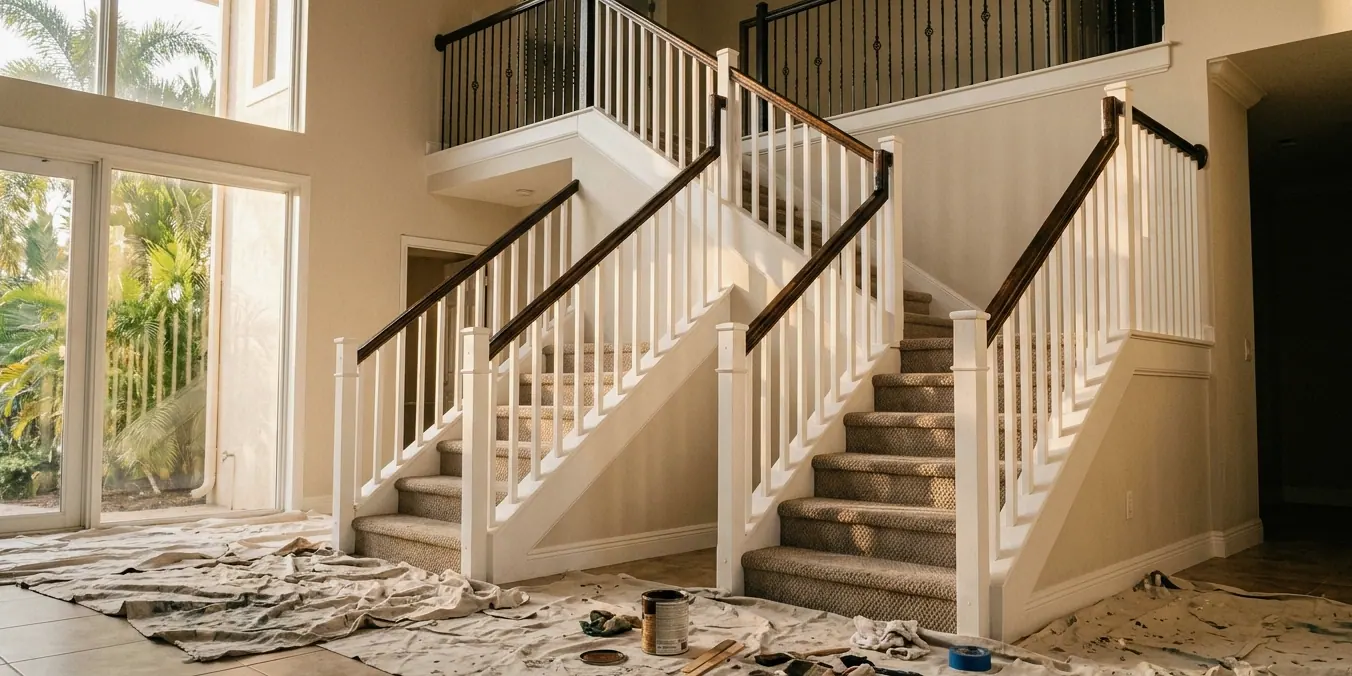
What stairs in local homes are made of
Most two-story homes built in Wesley Chapel since the late 1990s have carpeted stairs with a stained oak or poplar handrail, painted or stained wood spindles, and painted MDF stair skirts. A good number have metal balusters, either from the builder or a later upgrade. Some newer homes have wood-look treads or vinyl plank on the stairs.
Each of those surfaces gets a different finish. Wood handrails can be restained or painted. Metal balusters need a bonding primer for metal. Painted risers and stringers need a hard enamel that resists shoe scuffs.
The handrail is a high-touch surface
Hand oils wear through the finish on the top of a rail, often leaving a light, dry stripe where everyone grips it. Restaining a rail darker, like espresso or black, is the most common request. We sand through the old finish, which takes care, since a rail has curves and fittings where it meets the newel post.
We finish rails with a durable clear coat over stain, or a hard enamel if painting. Both need several days before heavy use, so we can leave one side of the stairs open or work the rail in sections.
Spindles and balusters
Wood spindles take the most time per square foot of anything we paint. Each one is round and turned, and drips run down the curves. We tape off carpet, brush each spindle carefully, and inspect from both sides. For metal balusters, we clean and degrease, spot-prime any rust, and paint in a satin black or oil-rubbed bronze look.
If the spindles are loose or wobble, we glue and pin them before painting, since paint will crack at a joint that moves.
Risers, skirts and stair walls
White risers and skirt boards get scuffed every day. A semi-gloss enamel wipes clean. The tall stair wall is often painted at the same time, and our interior painting crew can match it to the rest of the house. Matching enamel on the trim keeps the foyer looking unified, which is why many people add trim and baseboard painting to stair work.
Call us when you notice
- Handrail finish worn through where hands grip
- Orange oak spindles that date the foyer
- Black scuffs on white risers and stringers
- Loose or wobbly spindles
- Rust spots on metal balusters
How a staircase & railing refinishing job runs
Protect the stairs
Carpet, treads and the foyer floor are covered so nothing drips onto finished surfaces.
Tighten and repair
Loose spindles are glued and pinned, and dents in the rail are filled.
Strip or scuff
Rails are sanded to take new stain, and painted parts are scuff sanded and cleaned.
Stain, prime and paint
Rails get stain and clear coat, spindles and risers get primer and enamel.
Cure and reopen
We tell you when each part is ready for full use and leave touch-up paint.