What that bumpy ceiling is made of
Popcorn, or acoustic texture, is a sprayed mix of drywall compound and small bits of polystyrene or paper. Builders around Wesley Chapel used it through the 1990s and into the early 2000s because it went on fast and hid rough tape joints. Most of what we scrape in Meadow Pointe, Saddlebrook and Lexington Oaks is plain water-based material that softens a few minutes after we mist it.
Older homes are a different conversation. If your house was built before the mid 1980s, which is more likely in parts of Zephyrhills, Dade City or New Port Richey than in the newer Wesley Chapel communities, the texture should be tested for asbestos before anyone scrapes it. A small sample goes to a lab and results usually come back within a few business days. If it tests positive, that ceiling is a job for an abatement company, not a paint crew.
Painted popcorn changes the job
A ceiling that was rolled with paint at some point sheds water instead of soaking it up. The texture then has to be scored, soaked longer, and sometimes scraped dry in short sections, which can nearly double the labor. Before we quote, we press a wet sponge against a hidden corner. If it softens within five minutes, it is unpainted. If it stays hard, we price it as painted, so there is no surprise halfway through.
Sealing the room, and the AC
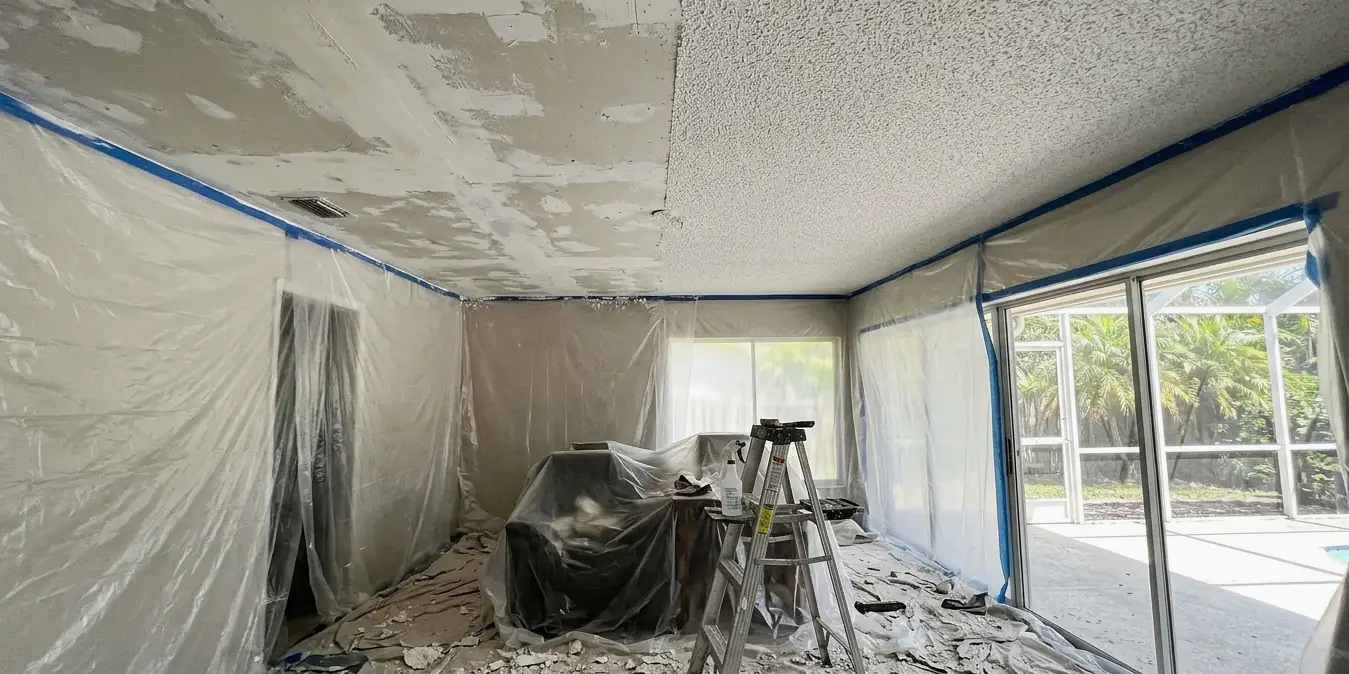
Scraping is wet and messy. We tape plastic from the top of the walls down to the floor, lay plastic and rosin paper over carpet or tile, and pull ceiling fans, light fixtures and smoke detector heads. The step most people never think of is the air handler. In a typical slab home here the return grille sits in a hall ceiling or a closet, and if the system runs during scraping it pulls fine dust into the ducts. We shut it off and seal the returns and registers in the work area until cleanup is done.
Furniture can stay if it is pushed to the center and wrapped, but empty rooms go faster and cost less.
Smooth, knockdown, or something in between
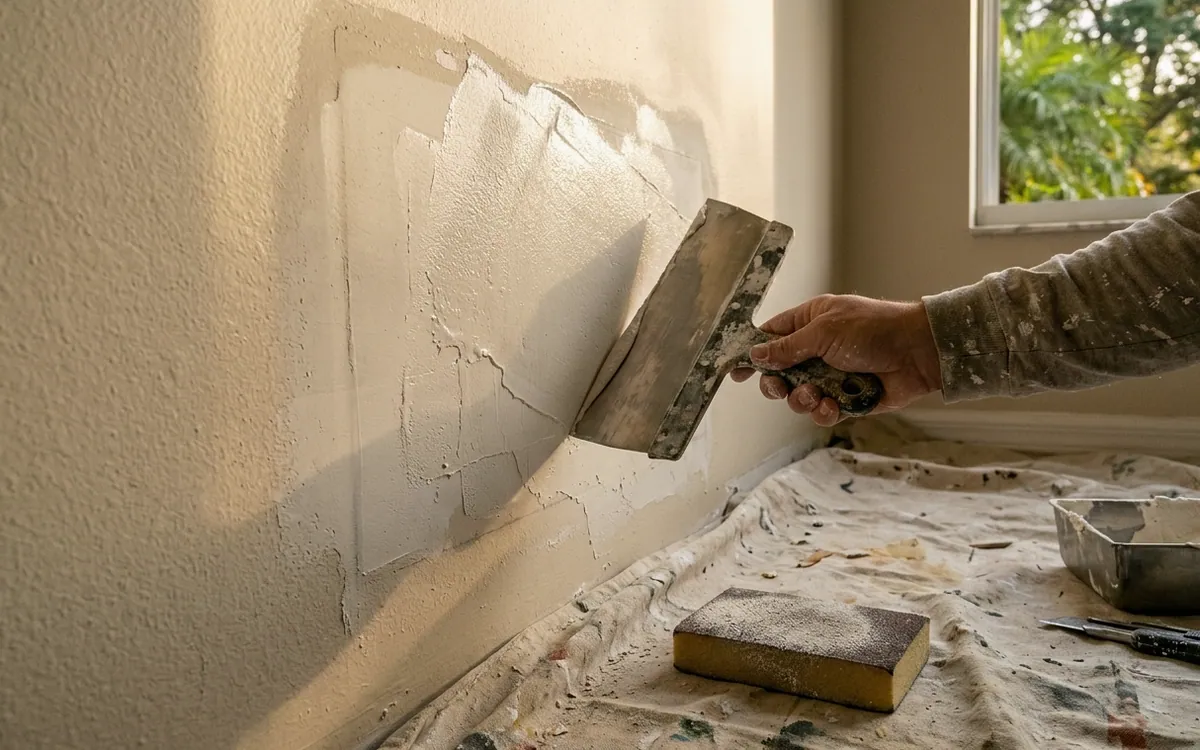
Once the texture is off, we fill old fastener holes, retape joints that were never properly finished, and skim. A fully smooth ceiling looks clean, but it is honest about every ripple, and in living rooms with big sliders the low afternoon light shows everything. A light knockdown or orange peel hides more, costs less, and blends with the walls in most builder homes. If the new ceiling has to match a room you are keeping, our texture matching work covers that.
We also find old leak stains under popcorn from AC drain pan overflows or a roof leak years back. Those get a stain-blocking primer, and soft or sagging spots are cut out and patched as part of water-damaged ceiling repair.
Call us when you notice
- Texture flakes keep landing on beds and counters
- Old brown stains show through every coat of ceiling paint
- A new ceiling fan cracked the texture around its box
- Dust and cobwebs cling to the bumps near AC vents
- You are updating the house before listing it
How a popcorn ceiling removal job runs
Test and look
We check whether the texture has been painted, note the build year, and recommend an asbestos test first if the house predates the mid 1980s.
Seal the room
Walls, floors and HVAC openings get covered, and fixtures and fans come down.
Mist and scrape
We soak small sections with a pump sprayer and scrape with wide blades, catching the wet texture before it hits the floor.
Repair and skim
Loose seams, nail pops and stains are fixed, then the ceiling is skimmed smooth or given a light texture and sanded.
Prime, paint, clean
Primer and two coats of flat ceiling paint go on, the plastic comes down, and the room is vacuumed.