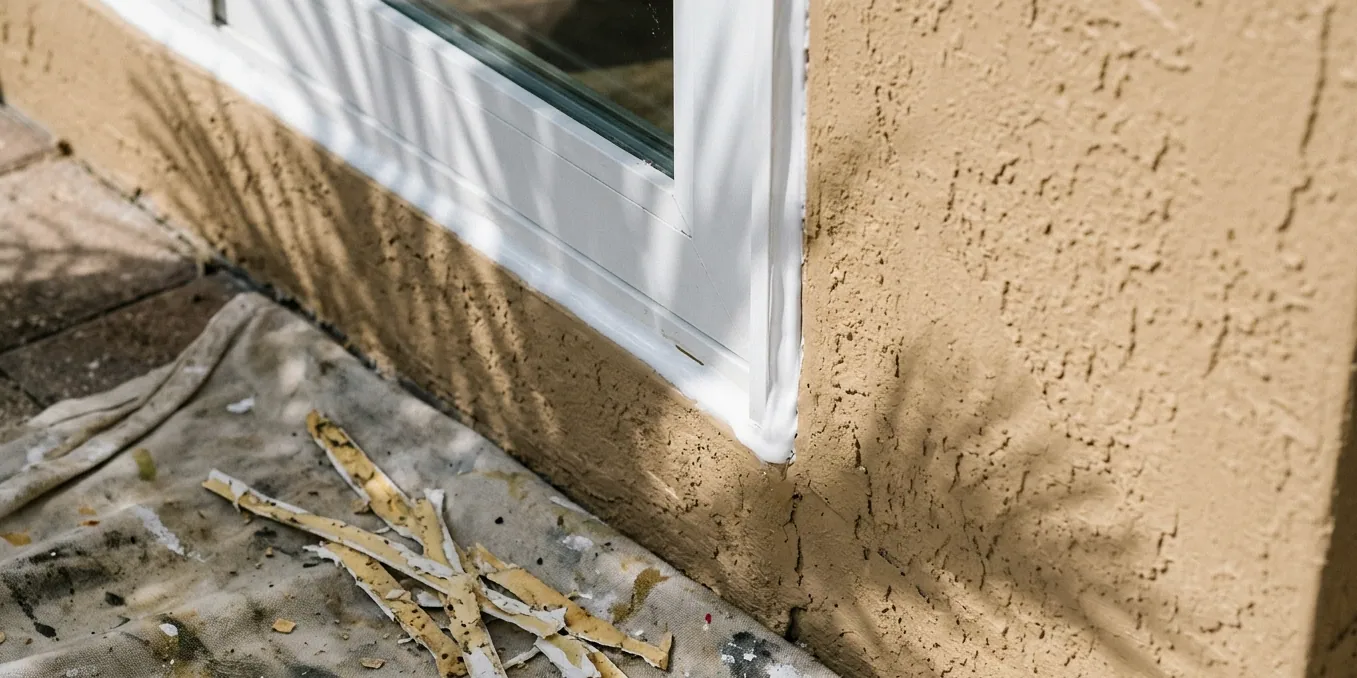
Where water gets into a stucco house
Block walls and stucco are pretty water resistant on their own. Leaks come through the joints. On a typical Wesley Chapel home, these are the places we seal:
- Perimeter of every window and slider, where the frame meets the stucco
- Entry door and garage door frames, especially at the bottom corners
- Hose bibs, dryer vents, AC line sets, electrical boxes and exterior lights
- Joints where stucco meets fascia, siding or a roof line
- Expansion and control joints in stucco on larger walls
Why old caulk fails so fast here
UV is the big one. Intense Florida sun breaks down cheap sealants, which harden, shrink and pull away from one side of the joint. A bead that was a third of an inch wide and stuck tight in year one can be a stiff, cracked strip by year four. Builders also often use paintable acrylic caulk everywhere because it is fast, and it does not stretch enough for a joint between an aluminum window and a stucco wall that heats and cools all day.
Smearing new caulk over old caulk does not work. It bonds to the failed bead, not to the wall, and it fails with it.
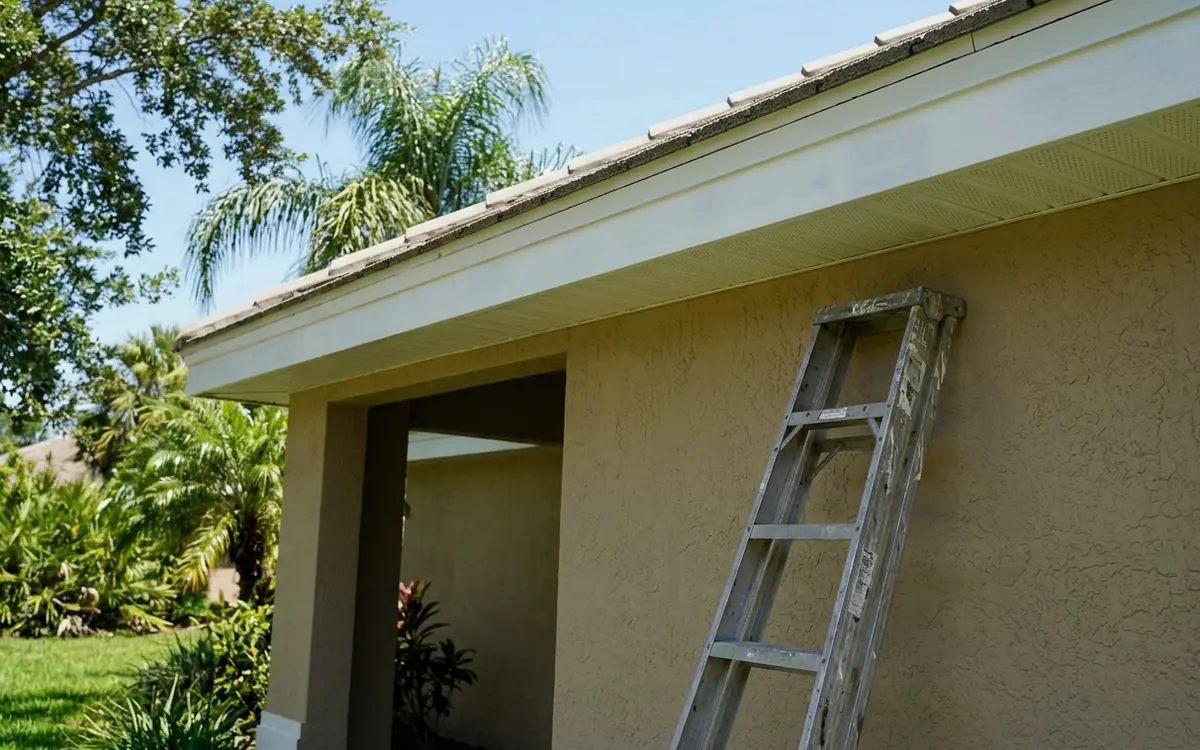
Picking the right sealant
Different joints need different products. Around windows and doors, we usually use a high-performance polyurethane or hybrid sealant that bonds well to stucco and aluminum, stays flexible and can be painted. For wide or deep joints we push in a foam backer rod first so the sealant bonds only to the two sides, which lets it stretch without tearing. Silicone has its place in nonpainted spots, but it cannot be painted over, so we keep it off areas you plan to recoat.
Timing with paint and storms
The best time to reseal is just before exterior paint, because the new beads get coated and protected. If you plan to paint within a year, combine the two: our exterior painting jobs include caulking as standard prep. If cracks in the stucco wall itself are showing up beside the frames, those go through stucco repair first.
Hurricane season runs June 1 to November 30, and wind-driven rain finds every weak joint. Spring is the ideal time to get it done, but any dry stretch works.
Call us when you notice
- Caulk around windows has cracked or pulled loose
- Water stains show on drywall under a window
- Daylight shows around a hose bib or dryer vent
- Gaps opened at the bottom corners of door frames
- You can push a fingernail into a gap behind old caulk
How a exterior caulking & sealing job runs
Walk the house
We check every window, door and penetration and mark joints that have failed or are close to failing.
Cut out old sealant
Old beads are removed with blades and tools down to clean surfaces.
Prep the joint
Joints are brushed clean, dried, and filled with backer rod where they are deep.
Lay new sealant
The correct sealant is applied and tooled smooth, bonding to both sides of the joint.
Cure and paint
Beads cure, then get painted to match the wall or frame if they are in a painted area.