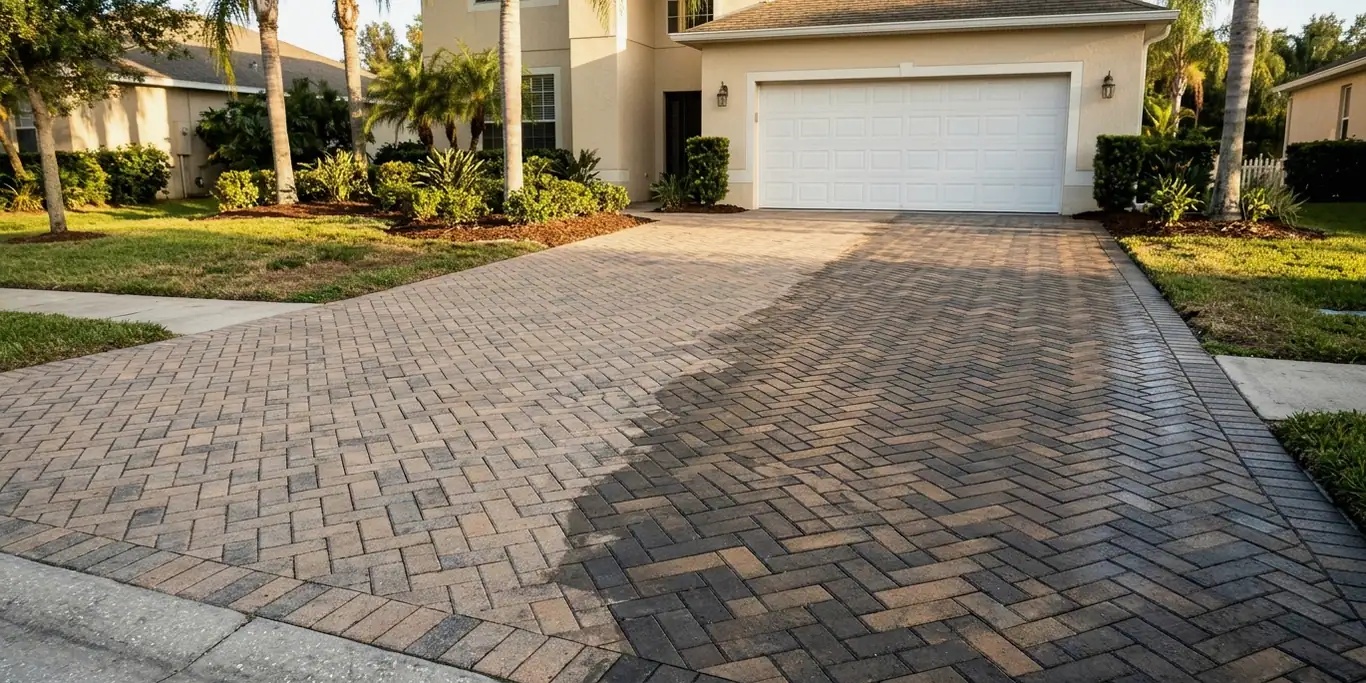
Why pavers need sealing in Pasco County
Pavers are the default driveway and pool deck surface in most Wesley Chapel neighborhoods built over the last twenty years. The pavers are tough. The sand between them is not. Heavy rain washes it out, pressure washing blasts it out, and fire ants carry it away. Once the joints empty, pavers shift, edges chip and weeds root in the gaps.
Sealer does two jobs. A joint-stabilizing sealer soaks into the sand and hardens it so it stays in place. It also slows how fast pavers fade and soak up oil, sunscreen, leaf tannins and pool chemicals.
Problems to fix before anything gets sealed
Sealer makes whatever is on the surface permanent, so we check for these first:
- Orange rust stains from irrigation on well water are common here. We treat them with a rust remover made for pavers before sealing, or they get locked in.
- White haze on new pavers is efflorescence, salts working out of the concrete. New installs usually need 60 to 90 days before sealing.
- Oil drips and tire marks on driveways get a degreaser ahead of the wash.
- Sunken or rocking pavers get lifted and re-leveled on the base before sand goes in.
Wet look or natural look
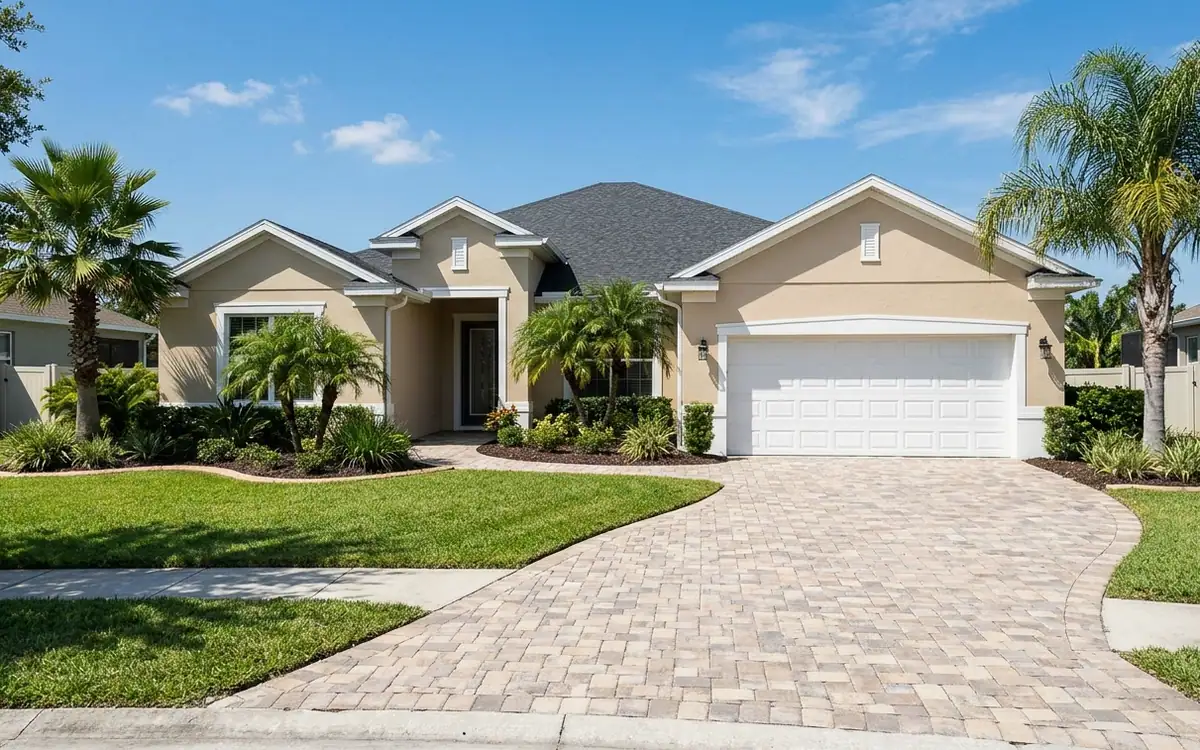
Solvent-based sealers deepen the color and leave a glossy wet look that many people like on a driveway. Water-based sealers dry closer to the natural paver color with a low sheen. Around the pool, we lean toward water-based products with a non-slip additive, because a glossy surface gets slick under wet feet. On the driveway, the choice is yours.
Either way, sealer goes on in thin coats. Too much turns cloudy, traps moisture and peels. Two light coats beat one heavy one every time.
Working around the weather
Sealer needs dry pavers, dry sand and several hours without rain. In summer that means washing one day, letting the joints dry at least a day, and sealing early in the morning before the afternoon storms build. October through May is easier to schedule. Sprinklers stay off 24 to 48 hours, cars stay off the driveway for a day, and pool furniture stays off until the next morning. If the screen enclosure over the deck is also tired, pool cage painting fits well on the same schedule.
Call us when you notice
- Joint sand is missing and weeds are poking through.
- Pavers have faded to a chalky, washed-out color.
- Orange rust stains run along the driveway edge.
- Ant mounds keep popping up between pavers.
- Pavers rock or click when you walk on them.
How a paver sealing job runs
Inspect the surface
We check joints, stains, sunken spots and any old sealer still on the pavers.
Clean and treat stains
A surface cleaner removes dirt and growth, and rust and oil spots get their own treatments.
Re-sand the joints
Once dry, fresh joint sand is swept into every gap and compacted so the pavers lock together.
Seal in thin coats
We roll or spray two light coats, working toward an exit so nobody steps on wet sealer.
Cure and reopen
Foot traffic returns after a few hours and cars after a day, with sprinklers kept off until the sealer sets.