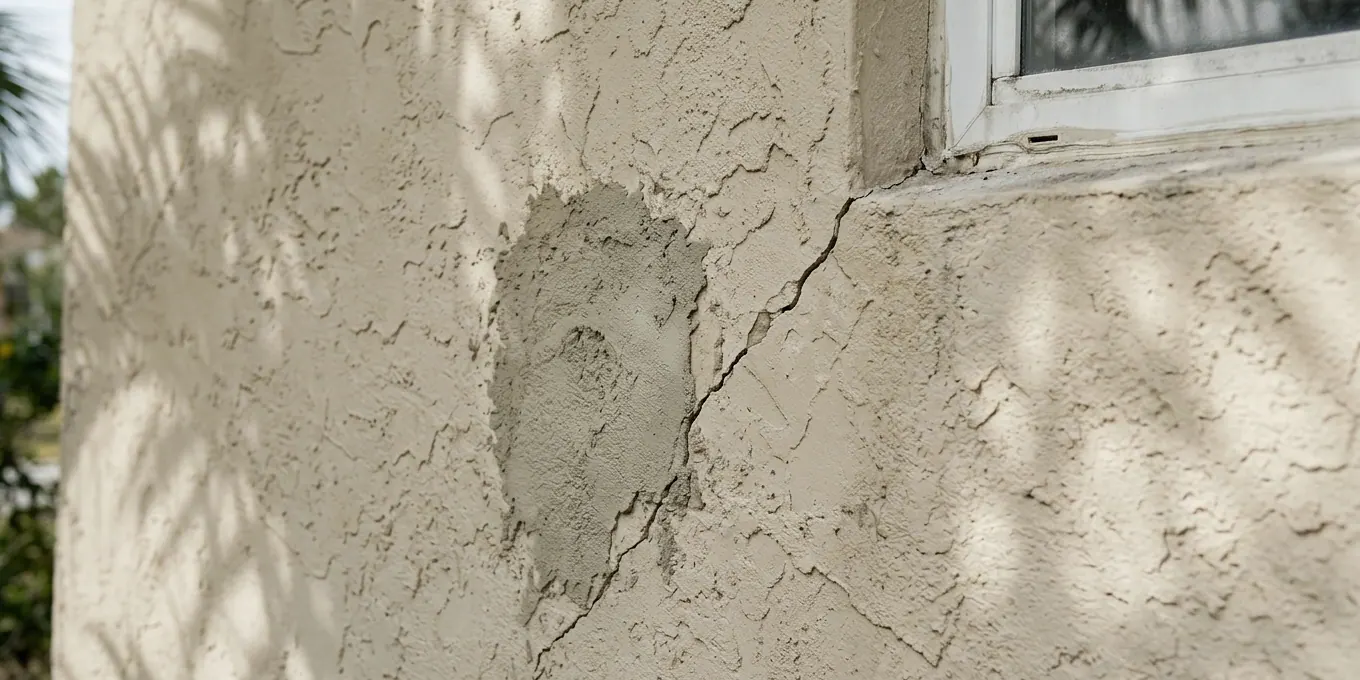
Reading the crack before fixing it
Stucco on a block home is usually about 5/8 inch thick and stuck straight to the masonry. As the block and the stucco expand and shrink at different rates through Florida heat and rain, the stucco shows stress. What that crack looks like tells us most of what is going on.
- Hairline cracks, thinner than a credit card edge, are normal shrinkage. They are cosmetic, but they still wick water, so they get filled and coated.
- Wider cracks, about 1/8 inch or more, often follow a mortar joint or the bond beam at the top of the wall. These are opened up, filled with a flexible patch and blended.
- Map cracking, a web of fine lines like a dry riverbed, points to stucco that dried too fast when it was applied. It is usually handled with an elastomeric coat rather than crack by crack.
- Window and door corner cracks run diagonally from the corners, where stress gathers. They are the most likely to let water in around the frame.
Hollow spots and delamination
Tap the wall with a screwdriver handle. Solid stucco gives a sharp click. A dull, drummy sound means the stucco has let go of the block underneath. Delamination often starts near a sprinkler head that sprays the same patch every morning, at a gutterless roof edge, or where an old crack let water sit behind the coat for years.
Hollow stucco cannot be caulked back in place. We cut the loose section out to sound material, bond the new base coat to the block, and float a finish coat to match. Painting over a hollow patch only hides it until a piece falls off.
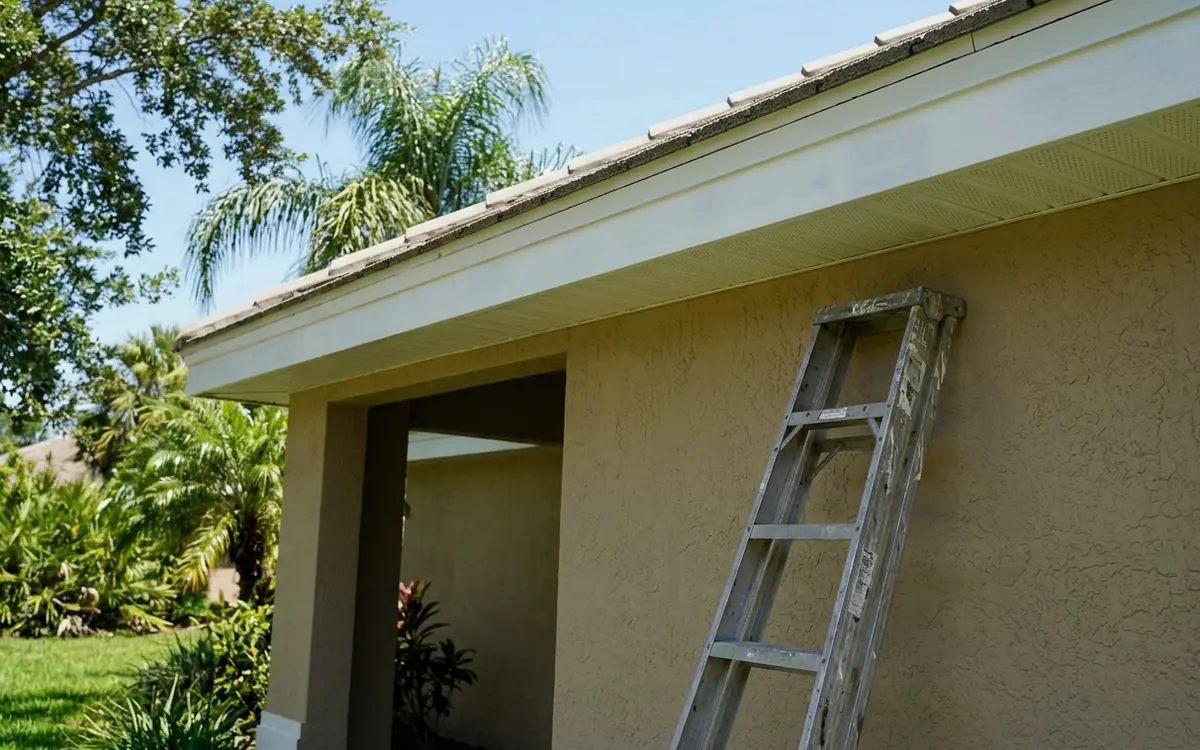
Matching texture so the patch disappears
Most houses here have a sand finish, a light knockdown, or a smooth float with swirl marks. A patch that is the right shape but the wrong texture shows from the street. We practice the texture on a scrap board and compare it in daylight before working it into the wall, and we feather the edges so there is no ridge around the repair.
After repairs cure, the wall needs paint or a coating. For walls with lots of fine cracking, elastomeric coating bridges hairlines that regular paint cannot. For a straight color refresh, our stucco painting crew picks up right after us.
When to call someone else
Stucco cracks are common, but a few patterns point past the stucco: a stair-step crack that widens year after year, a crack you can fit a coin into, or doors and windows that suddenly stop closing. We will tell you when what we see looks like foundation or settlement trouble that should go to an engineer before any cosmetic work is done.
Check your own walls first
Before you call, our free stucco crack checker walks you through what you are seeing in a few short questions and tells you which cracks can wait and which should be looked at before the next storm season. Then call and we will come measure.
Call us when you notice
- Diagonal cracks run from your window or door corners
- A section of wall sounds hollow when tapped
- Paint is blistering over a crack after rain
- A sprinkler has stained and softened one wall patch
- Fine web cracking covers a sunny side of the house
How a stucco repair job runs
Map the wall
We walk the house, tap for hollow areas, and mark each crack by type and width.
Open and clean
Wider cracks are opened into a V, and loose or hollow stucco is cut back to solid material.
Fill and rebuild
Cracks get a flexible patch, and open sections get new base coat troweled onto the block.
Match the finish
We float or spray the texture to match your wall and feather the edges.
Cure and coat
Patches cure before primer and paint or elastomeric coating go on.