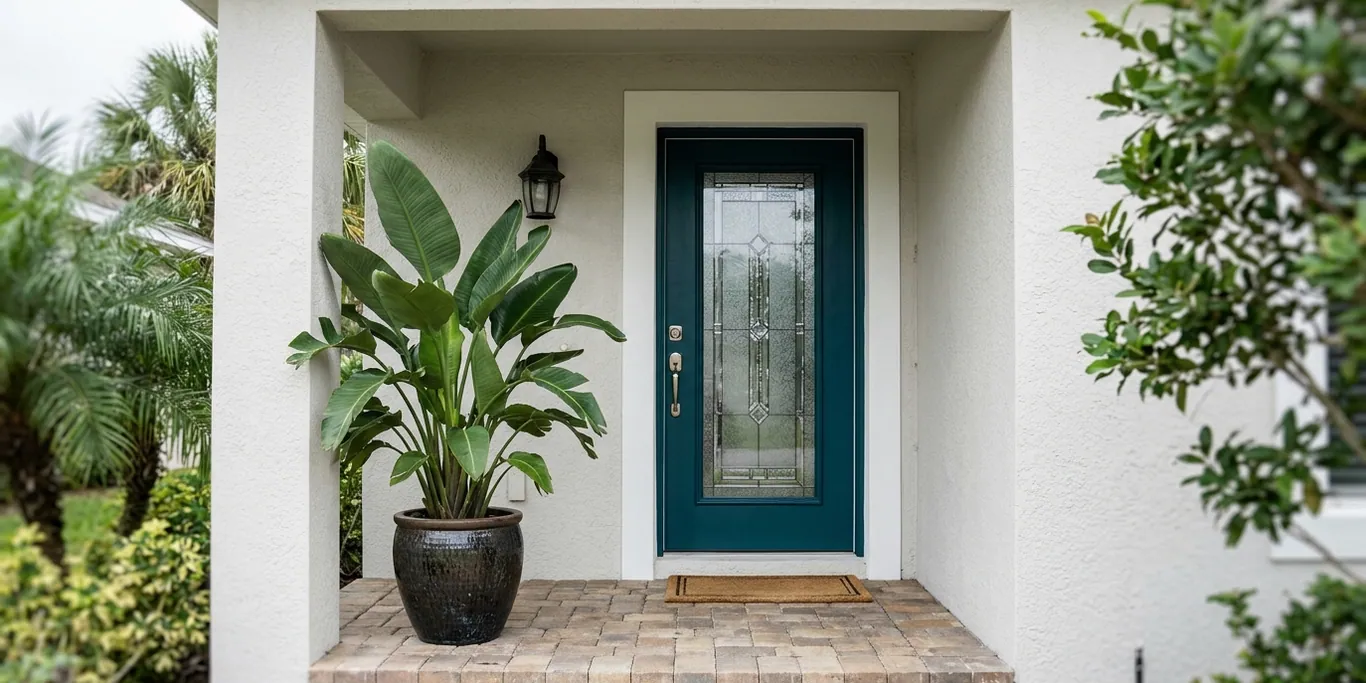
Door material decides the prep
Most front doors here are fiberglass or steel, sometimes with a decorative glass insert. Fiberglass has a slick factory skin that paint will not grip without scuffing and a bonding primer. Steel doors dent and rust at the bottom edge where water collects. Wood doors, less common here, need sanding and a primer that blocks tannin from bleeding through.
We check what you have first, since one wrong primer on fiberglass and the paint peels off in sheets.
Off the hinges or in place
We prefer to pull the door, lay it flat and spray or brush it out of the sun. That gives the smoothest finish and lets us paint the edges. While the door is off, we hang a temporary panel in the opening so the house stays closed and the AC stays on. When a door cannot come off easily, like a wide double door or one with sidelites, we paint in place in the morning shade and keep it propped until it is dry to touch.
Hardware, kick plates and the peephole all come off. Painting around them always leaves an edge you can see.
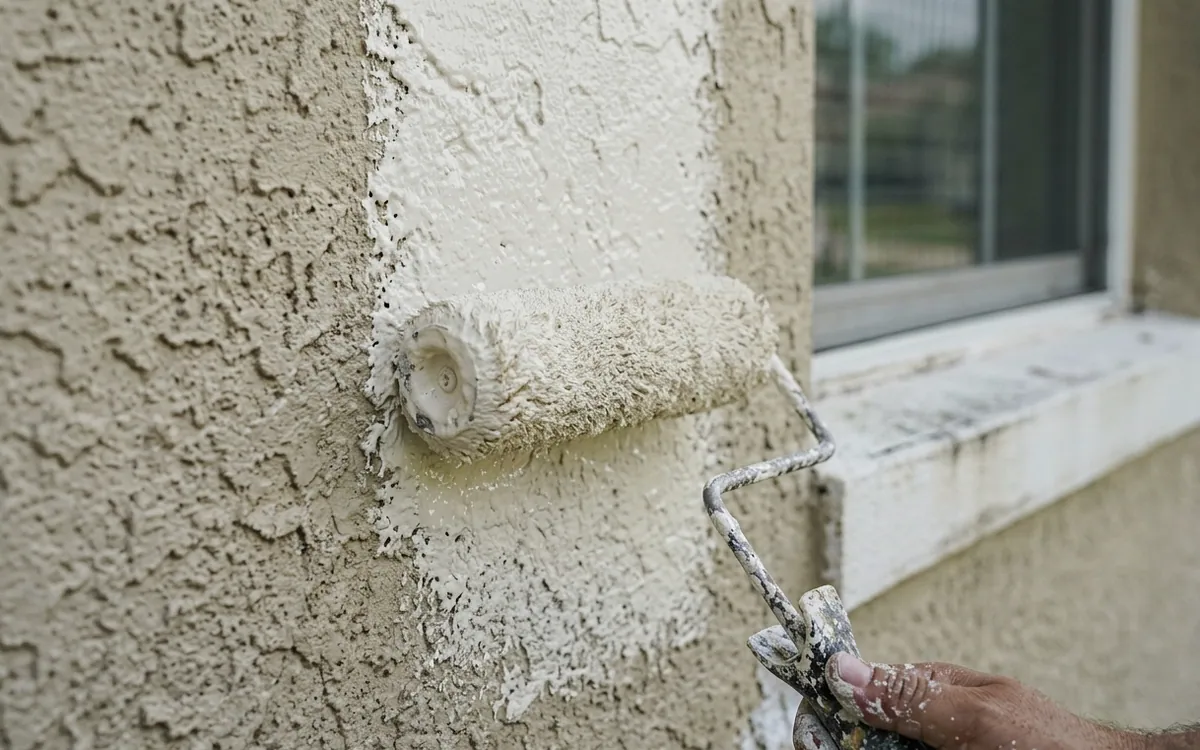
Sun, color and heat
Doors facing west or south in Wesley Chapel get blasted from mid-afternoon on. Dark colors absorb that heat, and on some steel or fiberglass doors the manufacturer warns against very dark paints because the skin can warp. We check the door brand guidance and suggest UV-resistant exterior enamels that hold color. Reds, teals and blues fade fastest, so a slightly deeper shade than you think holds its look longer.
Your HOA may have an approved door palette separate from body and trim colors. We help with the swatches.
Frames, thresholds and the rest of the entry
The door frame and brick mold usually need paint and caulk at the same time. Bottom corners of the jamb are where wood rot starts, and we probe them with an awl. Soft spots are cut out and replaced through our wood rot repair work. Many homeowners add the garage door the same day so the front of the house looks finished, and our garage door painting pairs easily.
Call us when you notice
- Faded or chalky color on a sun-facing door
- Peeling paint on a fiberglass door
- Rust bubbles at the bottom of a steel door
- Scratched paint around the handle
- New HOA palette or a fresh exterior repaint
How a front door painting job runs
Check the door type
We identify fiberglass, steel or wood and choose the right primer and enamel.
Remove hardware
Locks, handles, kick plate and peephole come off and are set aside.
Scuff, fill and prime
Surface is sanded, dents filled, rust treated and the whole door primed.
Paint two coats
Enamel goes on in thin, even coats, with the edges done too.
Rehang and reinstall
Hardware goes back, weatherstrip is checked, and the door is tested for a good seal.