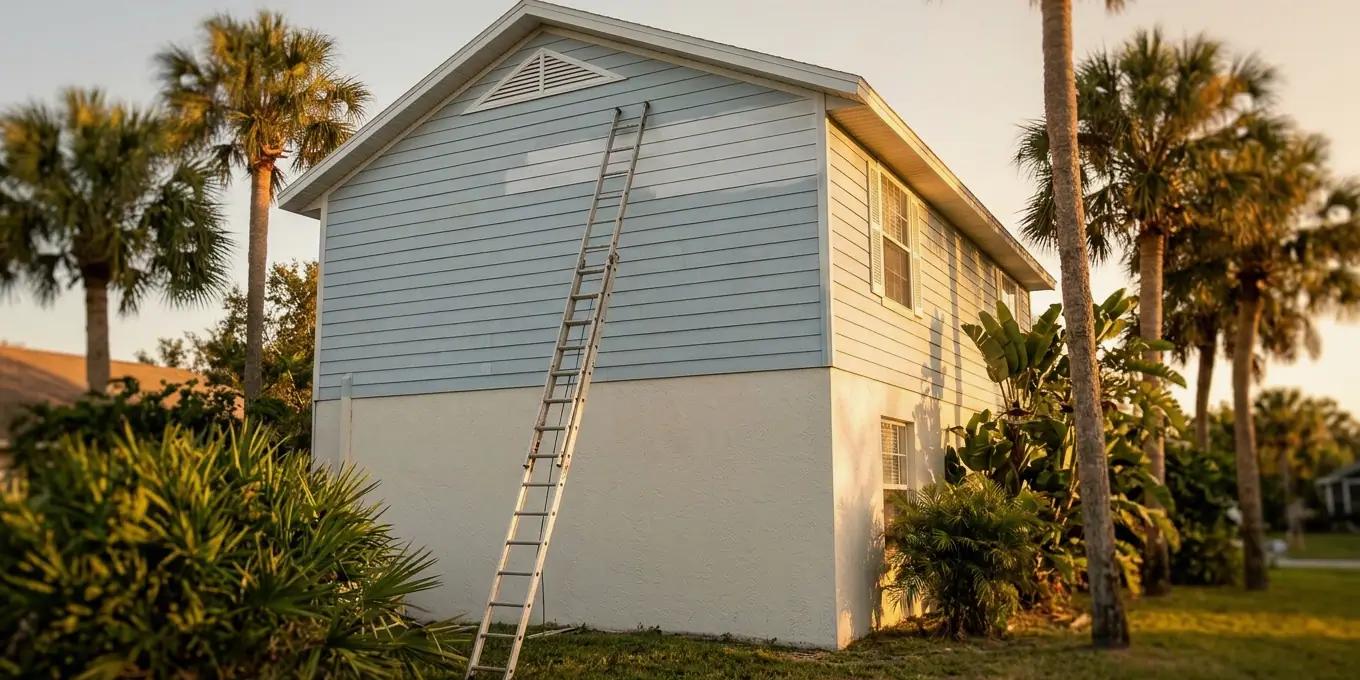
Where siding sits on homes here
Builders in Pasco County commonly frame the second floor with wood studs instead of block, then side it with fiber cement lap boards or, on some homes, vinyl. You also see siding on gable triangles above stucco walls, on bonus rooms over garages, and on additions and enclosed porches put on after the original build. Since these surfaces are high up and face the full force of afternoon storms, damage often goes unnoticed until paint fails or a board falls.
Fiber cement problems and fixes
Fiber cement holds up well in Florida heat, but it has weak points. Board ends that were never sealed absorb water and swell or crumble. Boards nailed too close to an edge crack. Butt joints without flashing behind them let rain into the wall. Impact from a falling branch or a stray ball can break a board clean through.
To replace a board, we cut the nails holding it and the course above, slide the damaged piece out, and fit a new one with a flashing strip behind each butt joint. We prime every cut end before installing, then caulk and paint. Matching the lap reveal and the wood-grain or smooth face is what makes the repair invisible from the street.
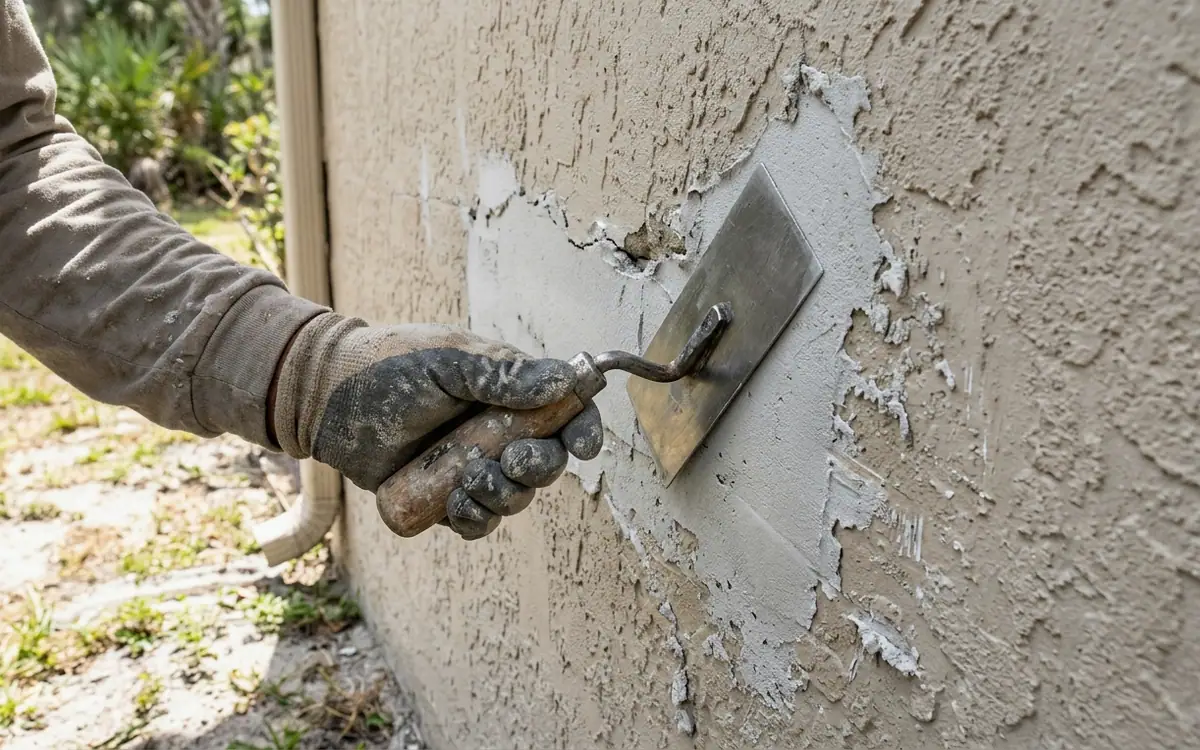
Vinyl siding: warping and wind
Vinyl is lighter and more forgiving, but it does not like a reflective neighbor. A low-E window across a side yard can focus sunlight onto vinyl and warp it into waves. It also snaps loose in strong gusts when the nailing hem was fastened too tight. We release panels with a zip tool, replace the damaged ones, and nail new panels loosely so they can move with temperature. Vinyl color fades over time, so a perfect match may require pulling a panel from a hidden spot and putting the new one there instead.
Second story access and gables
Most second story repairs are done from extension ladders with standoffs. Steep yards, lanai cages and pool decks sometimes call for a small lift or scaffolding, and we include that in the quote if needed. At gables we check the attic vent, the trim where siding meets stucco, and the joint along the roof line, since those spots often leak first. Once boards are replaced, we caulk joints as part of exterior caulking and paint the wall face so new and old boards match, or include the whole house in exterior painting.
Call us when you notice
- Paint is peeling at board ends on the upper floor
- A board is cracked or missing after a storm
- Vinyl panels look wavy on one side of the house
- Water stains show inside a bonus room wall
- Gaps opened where siding meets the stucco
How a siding repair job runs
Inspect up close
We go up the ladder, check each course and joint, and photograph damage you cannot see from the ground.
Source matching boards
We match the profile, reveal and face texture of your existing siding.
Remove and replace
Damaged boards are released, flashing goes behind joints, and new boards are fastened to the framing.
Seal the edges
Cut ends are primed, and joints at trim, windows and stucco are sealed.
Paint to match
New boards are primed and painted, usually the full wall face so the color is even.