What your cabinets are made of matters
Before we quote, we open a door and look at the edge. Most builder kitchens in Wesley Chapel from the 2000s and 2010s have stained maple or oak face frames with plywood or particleboard boxes, and those paint beautifully. Solid oak needs a grain filler if you want a smooth look, otherwise the open grain telegraphs through the paint.
Thermofoil, the plastic wrap found on some white doors, is the one we usually turn down. Heat from the oven and dishwasher loosens the glue, and the film peels no matter what goes on top. If yours is already lifting near the range, replacement doors make more sense than paint.
Why we take the doors off
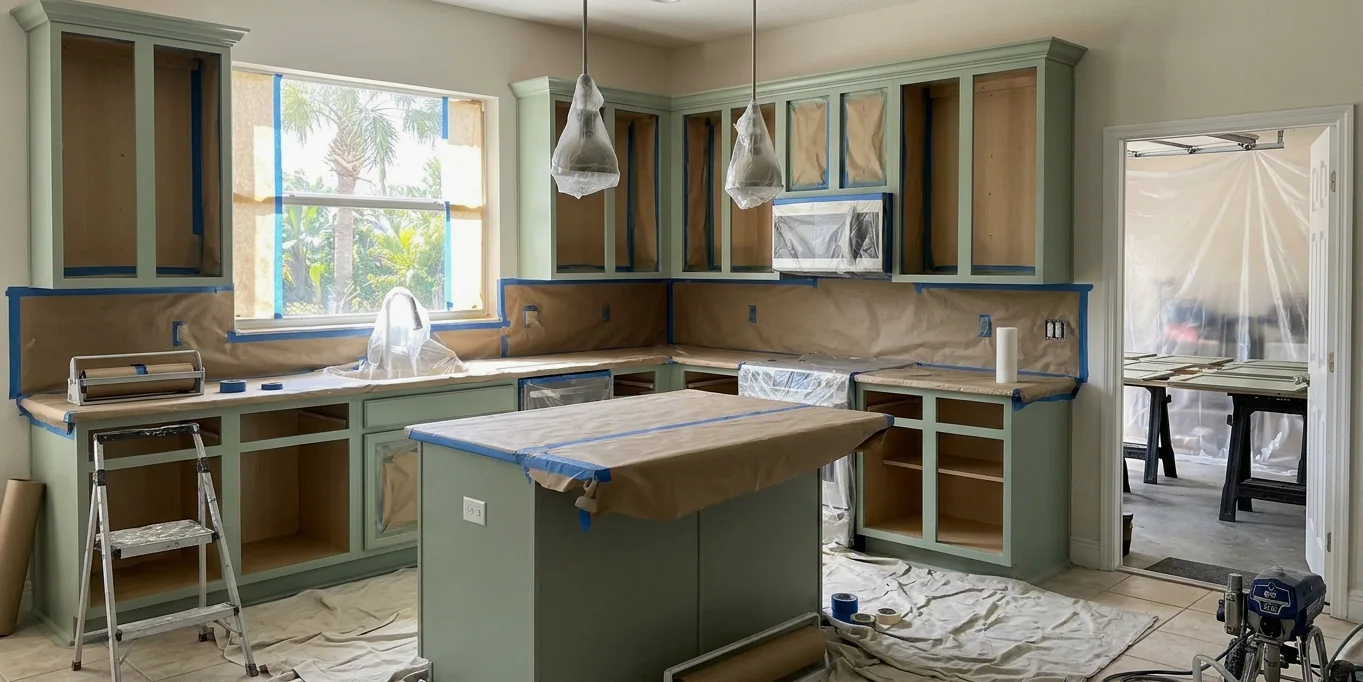
Brushing doors in place leaves brush marks and paint in the hinge cups. We label every door and drawer front, remove the hardware, and spray them flat on racks in a masked work area, usually your garage. The boxes and face frames are sprayed in place with the counters, floors and appliances fully wrapped.
This is also when to decide on hardware. If you are switching from knobs to pulls, we fill the old holes and drill the new ones before priming, so the filler is invisible.
Humidity and cure time
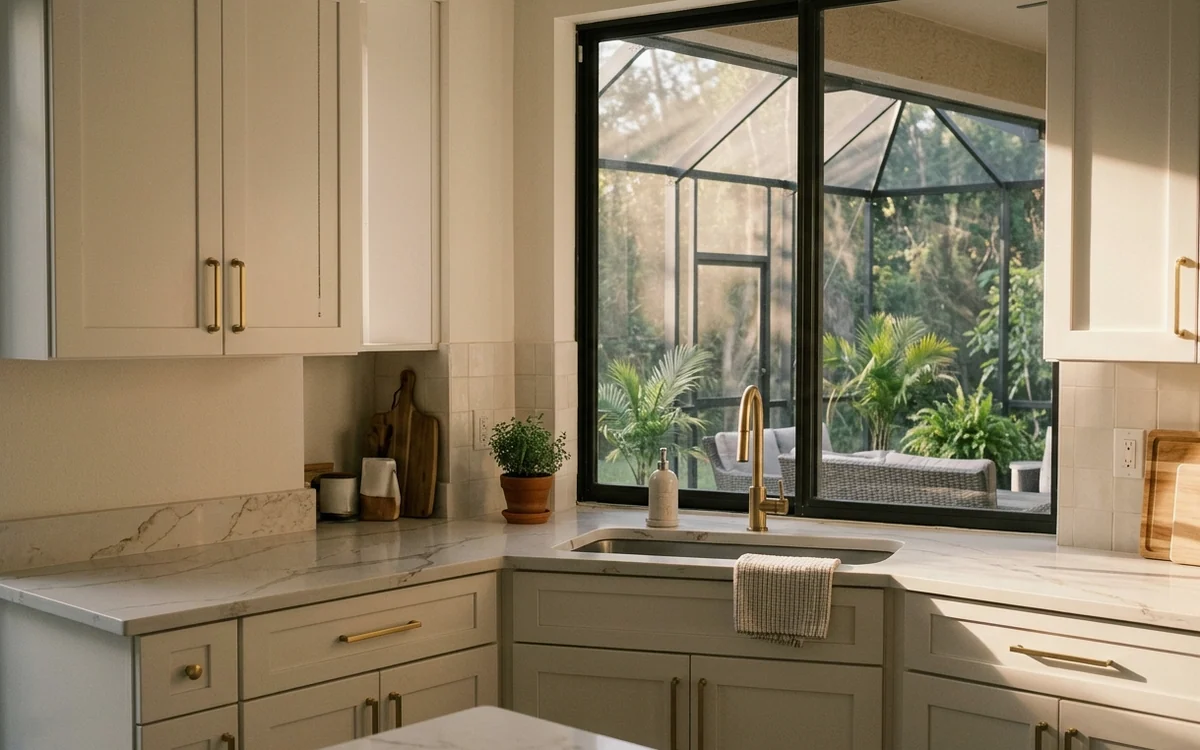
Cabinet enamel feels dry in an hour but takes weeks to reach full hardness. Florida humidity slows that cure, so we keep the AC on and the house closed while we spray. We use a urethane-modified waterborne enamel or a two-part catalyzed product, depending on how the kitchen gets used. Both resist the grease and hand oils that wreck a regular wall paint.
For the first two weeks, close doors gently and avoid sticky tape or wet towels hung over them. After that, they wipe clean like a factory finish.
Bathrooms and laundry rooms too
Bath vanities get the same process, and they are a good way to tie the house together if you are also refreshing the kitchen. Laundry room uppers and built-in desks are quick additions while the spray setup is already in place.
Not sure between a greige, a navy island or classic white? A short color consultation with sample doors in your actual kitchen light settles it before anything gets sprayed, and saves you from living with a shade that looked different on the card.
Call us when you notice
- Orange-toned oak or maple that dates the kitchen
- Worn finish around the sink base and trash pullout
- You like the layout but not the color
- Prior painted cabinets are chipping at the edges
- You are listing the home and want a fresher kitchen photo
How a cabinet painting job runs
Inspect and sample
We check the cabinet material and spray a sample door in your chosen color so you see it in your own light.
Remove and label
Doors, drawer fronts and hardware come off, each tagged to its opening.
Degrease and sand
Every surface is degreased, scuff sanded, and dents filled, then wiped clean of dust.
Prime and spray
A bonding primer goes on first, then two coats of enamel, sanded lightly between coats.
Rehang and adjust
Doors go back on their own hinges, and we adjust every one so the gaps are even.