Pressure is not the same on every surface
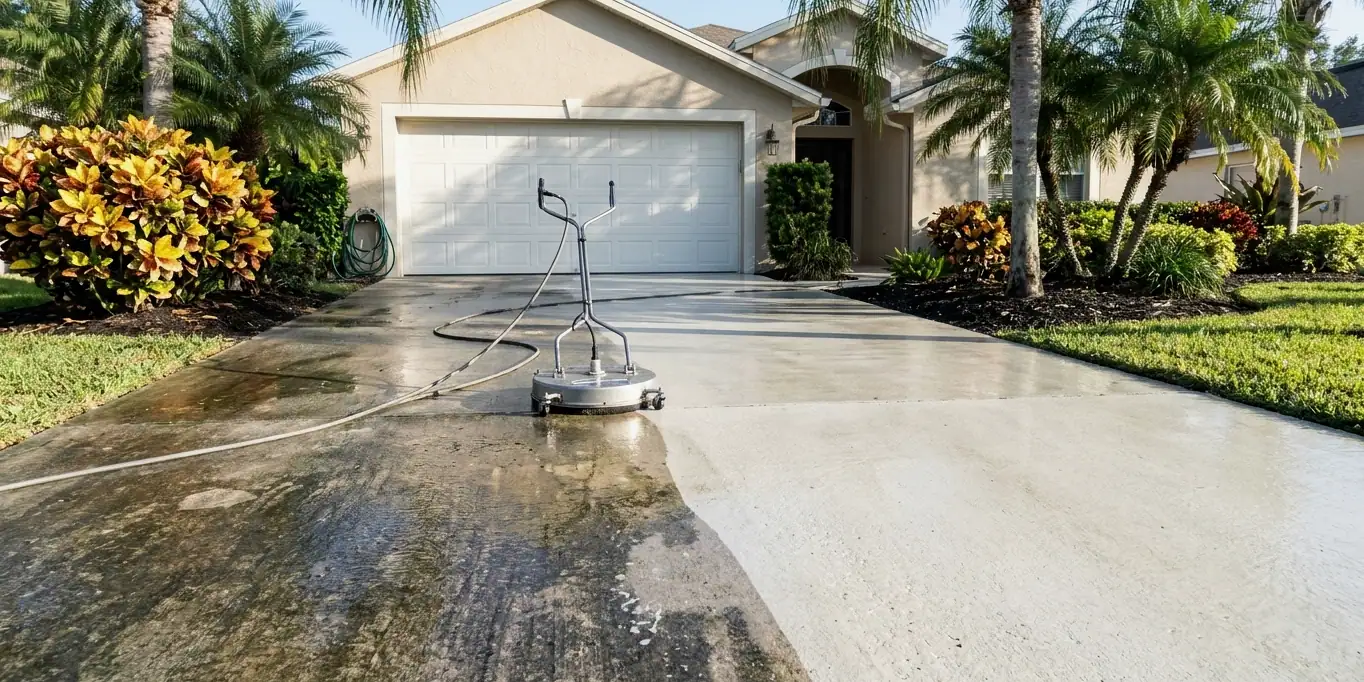
The biggest mistake with pressure washing is using full force everywhere. Concrete driveways tolerate high pressure through a rotary surface cleaner, which leaves even results without the stripes a wand leaves. Pavers need less, or the sand between them blows out. Stucco walls, screen enclosures and painted surfaces get low pressure with a cleaning solution that does the work, because high pressure can force water behind stucco and strip sound paint.
- Driveways and sidewalks: surface cleaner, then post-treatment for lingering mildew.
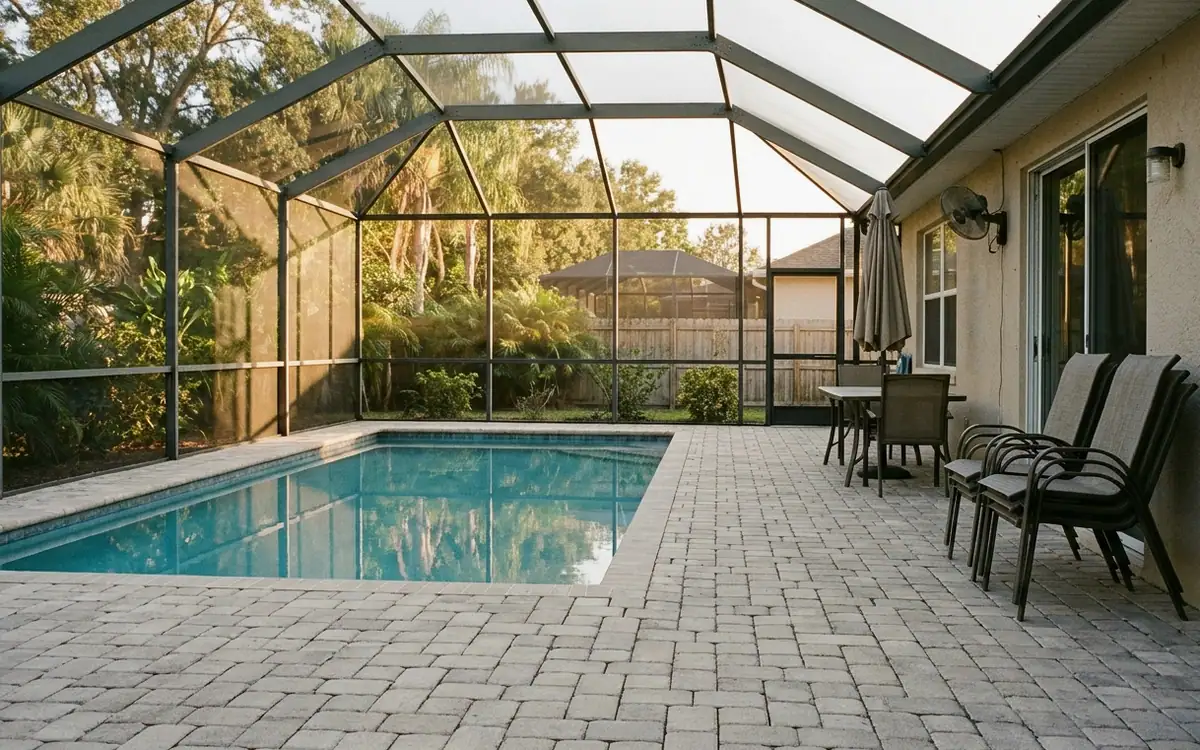
- Paver driveways and pool decks: moderate pressure, then joint sand refilled if it washed out.
- Stucco walls and lanais: soft wash with a mild cleaner and low-pressure rinse.
- Screen cages: gentle wash that will not stretch or tear old screen.
Stains that need more than water
Many stains in this area are not dirt. Orange or brown streaks on walls and driveways usually come from irrigation water with high iron content, and they need a specific rust remover rather than more pressure. Red clay tracked onto driveways from construction near new subdivisions responds to its own cleaner. Black spots on shaded concrete are often mildew colonies with roots that bleach-based cleaners handle better than force. Oil drips from cars need a degreaser and dwell time. We identify the stain before choosing the treatment.
Timing matters too. We avoid washing in the hottest midday sun when cleaners dry before they can work, and we plan around the afternoon storms that roll in most summer days.
Protecting plants, screens and windows
Cleaners that kill mildew can also harm plants, so we wet the landscape beds before and after, keep runoff out of ponds and storm drains, and rinse thoroughly. We cover outlets and exterior lights, keep pressure away from window seals and dryer vents, and check that sliders are closed. If your screen cage is old and brittle, we tell you before washing it so a weak panel does not surprise you.
Washing before paint or sealing
Pressure washing is the first step before most exterior projects. Paint will not stick to chalky, mildewed stucco, and sealer over a dirty paver deck locks the stains in. When washing is prep for exterior painting or paver sealing, we let surfaces dry for at least a day before the next step. Roofs are a different job with different chemistry, handled through roof soft washing.
Call us when you notice
- Black or green mildew on the shaded side of the house
- Driveway has dark patches and tire marks
- Pool deck pavers are slippery or stained
- Orange irrigation stains on walls and sidewalks
- HOA notice asking you to clean the driveway or walls
How a pressure washing job runs
Identify surfaces and stains
We go over each surface, its condition and the stains, and agree on what gets cleaned.
Protect the property
Plants are pre-wet, outlets and fixtures covered, and windows and doors checked.
Pre-treat
Cleaners for mildew, rust, clay or oil are applied and allowed to dwell.
Wash at the right pressure
Each surface is washed with the pressure and tool it can take.
Rinse and check
Everything is rinsed, plants are watered again, and missed spots are spot treated.