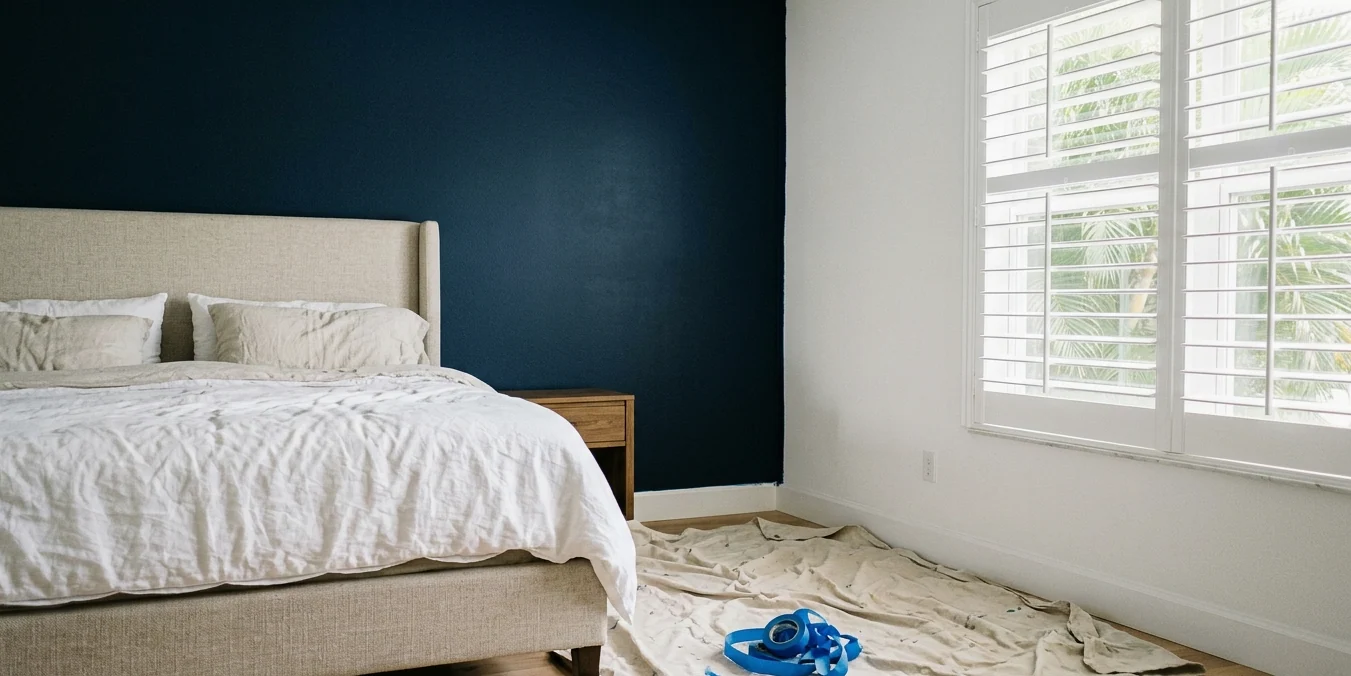
Picking the wall
The best accent wall is usually the one your eye lands on first when you walk in, like the wall behind a bed, a fireplace or TV wall, or the end of a long hallway. In open Florida floor plans, a dark wall in the middle of a great room can feel like a hole, so we often suggest the wall facing the lanai doors instead, where it frames the view.
Light matters a lot here. A west-facing room in July gets low, orange sun in the evening that warms up any color. A deep green that looks moody on a chip can turn olive. We brush large samples on the actual wall and let you look at them morning and night before committing.
Getting deep colors to cover
Navy, charcoal, forest green and terracotta are popular, and they are harder to apply than they look. Deep bases have less pigment that hides and more colorant, so one coat over white looks blotchy. We prime with a gray-tinted primer, then apply two finish coats. A matte or eggshell sheen keeps roller marks from showing in raking light.
When the color leaves, it leaves too. Going back to white over a dark wall takes primer and two coats, which is worth knowing if you think you might change it in a couple of years.
Beyond a single color
Accent walls do not have to be one flat color. Some of what we paint:
- Color blocking, like a painted arch behind a desk or a half wall in a nursery.
- Horizontal or vertical stripes laid out with a laser level.
- Board and batten or picture-frame molding painted in one color with the wall.
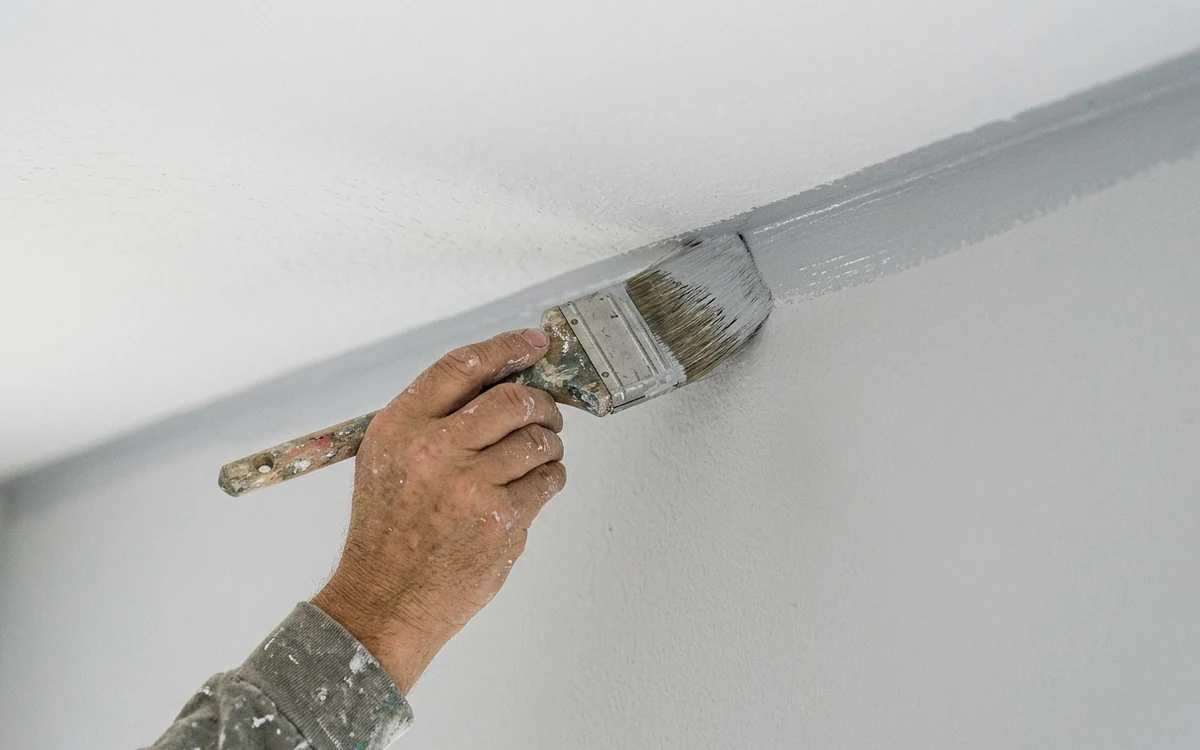
- A ceiling painted to match the accent wall for a wrapped look.
Molding walls and installs
Board and batten walls look best when the battens are spaced to the wall, not to a fixed number. We lay them out, nail and caulk every joint, and fill nail holes before painting so the wall reads as one piece. If you need trim installed first, our trim installation crew handles it in the same trip. Choosing the shade can be the hardest part, and a color consultation narrows it down quickly.
Call us when you notice
- A room feels flat and all one color
- Your TV or fireplace wall needs a backdrop
- A nursery or office needs a little personality
- Deep paint you rolled yourself looks streaky
- You want a painted arch, stripe or board and batten look
How a accent wall painting job runs
Sample on the wall
We brush large color samples on the actual wall so you can see them in your light.
Lay out lines
For patterns, stripes or molding, we mark everything with a laser level first.
Seal the tape edge
Tape is sealed with the base wall color so the accent color cannot bleed under it.
Prime and apply color
Tinted primer goes on first, then two finish coats rolled in one direction.
Pull tape and touch up
Tape comes off before the paint fully hardens, and any small flaws are cut in by hand.