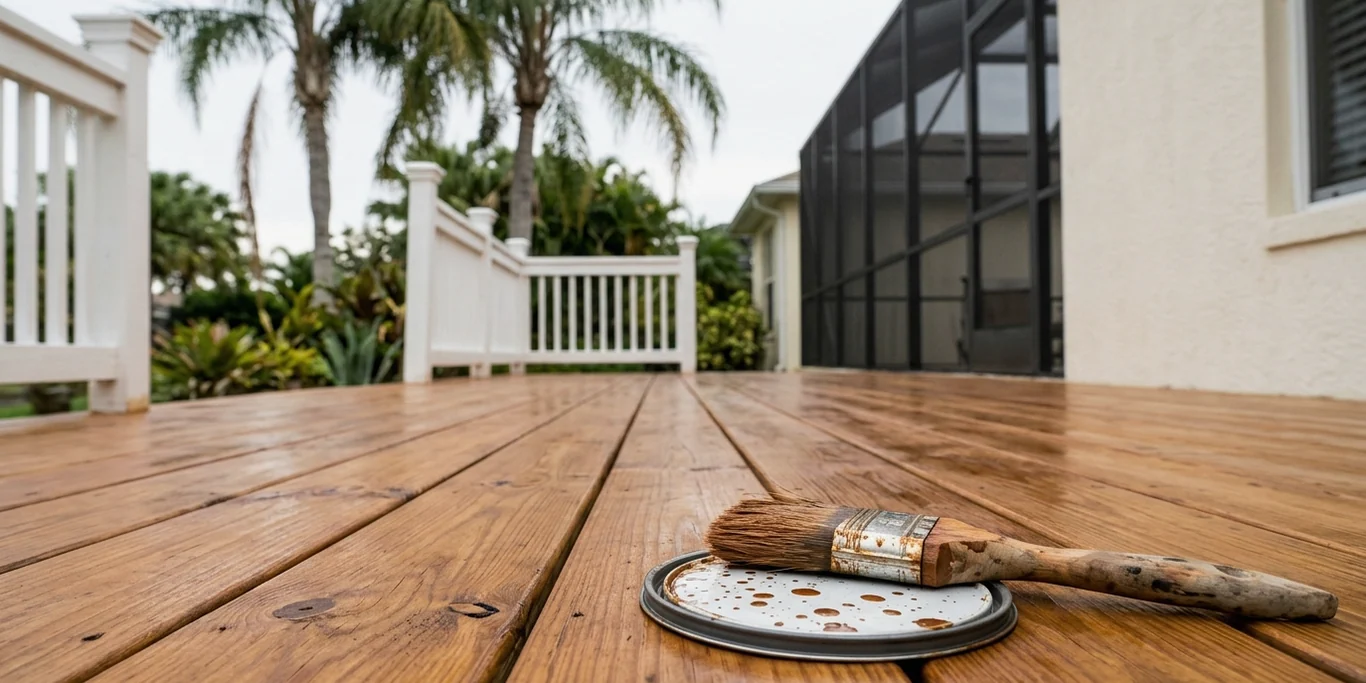
What sun and rain do to a deck here
Most decks around Wesley Chapel are pressure-treated southern yellow pine: a raised deck off a back slider, a lakefront dock in Land O' Lakes, or stairs down from a second-floor lanai. The treatment protects the wood from rot well. It does nothing against UV. Bare boards go silver gray within months, the surface fibers loosen, and the face starts to check along the grain.
Then the afternoon storms soak those open checks every day from June through September. Boards cup, fasteners rust and lift, and black mildew settles into the shaded corners near the house. Stain does not stop all of that, but it slows the graying, sheds most of the water and gives you a surface you can walk on barefoot.
Semi-transparent, solid or clear
We steer most pine decks toward a penetrating semi-transparent oil or hybrid stain. It soaks into the wood instead of forming a film, so when it wears it fades rather than peels, and the next coat goes on after a cleaning instead of a full strip.
- Clear and toner finishes show the most grain but carry little pigment, so in full sun they last about a year.
- Semi-transparent stains are the sweet spot for most decks, usually 18 to 30 months on the floor boards.
- Solid stains hide old, mismatched or patched boards, but they behave like paint and can peel where people walk.
- Railings hold any finish longer than the floor, so we sometimes use solid on rails and semi-transparent on the decking.
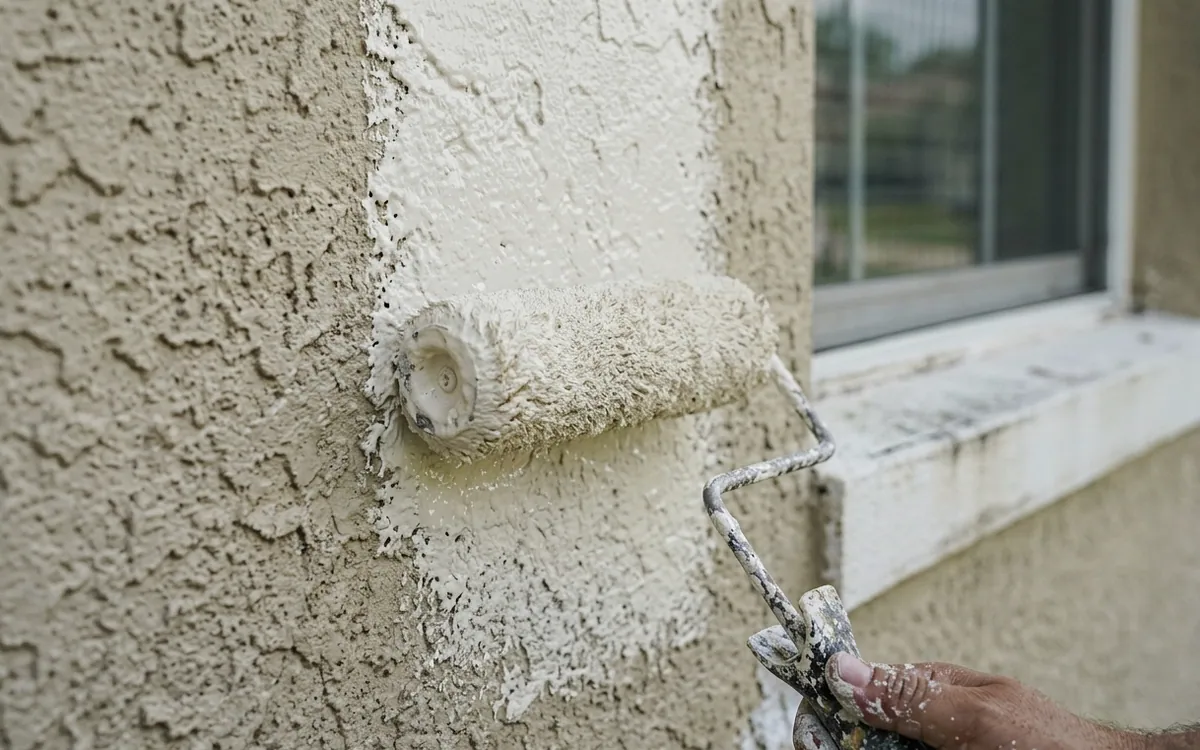
New wood has to wait
A brand-new pressure-treated deck is often still wet from the treatment plant. Stain applied too early sits on top and flakes. The test is simple: sprinkle water on a board. If it beads, wait. If it soaks in within a few minutes, the wood is ready. In our summer heat that usually means six to ten weeks after the build, longer for boards under a covered lanai.
When an old finish has to come off
If a previous owner rolled solid stain or deck paint on the floor boards and it is now peeling in sheets, a new coat on top will fail just as fast. We strip it with a chemical stripper and a low-pressure rinse, then neutralize with an oxalic brightener so the new stain penetrates evenly. Sanding is saved for raised grain and fuzzy spots, not the whole deck.
Soft or split boards get flagged before any stain goes down, because swapping a few boards costs far less than staining over a problem. Soft posts, joists or stair stringers are a framing job; see our wood rot repair work for that side.
Call us when you notice
- Water soaks into the boards instead of beading up.
- The deck has turned silver gray or feels fuzzy.
- Old solid stain is peeling in the walking paths.
- Black mildew spots keep coming back near the house.
- Splinters catch socks and bare feet.
- Screw heads are lifting or bleeding rust.
How a deck staining & sealing job runs
Walk the deck
We probe boards and posts, check fasteners, and test how the old finish and the bare wood take water.
Clean or strip
A deck cleaner lifts mildew and gray fibers, and peeling coatings get a stripper. We rinse at low pressure so the soft pine does not gouge.
Brighten and dry
An oxalic brightener restores the wood color and opens the grain. The deck then dries at least 48 hours with no rain on it.
Stain in small sections
Stain goes on a few boards at a time and is back-brushed so it soaks in, with any excess wiped before it turns tacky.
Cure and check
Foot traffic stays off for a day and furniture for two. We then walk the deck with you to check board ends and gaps.