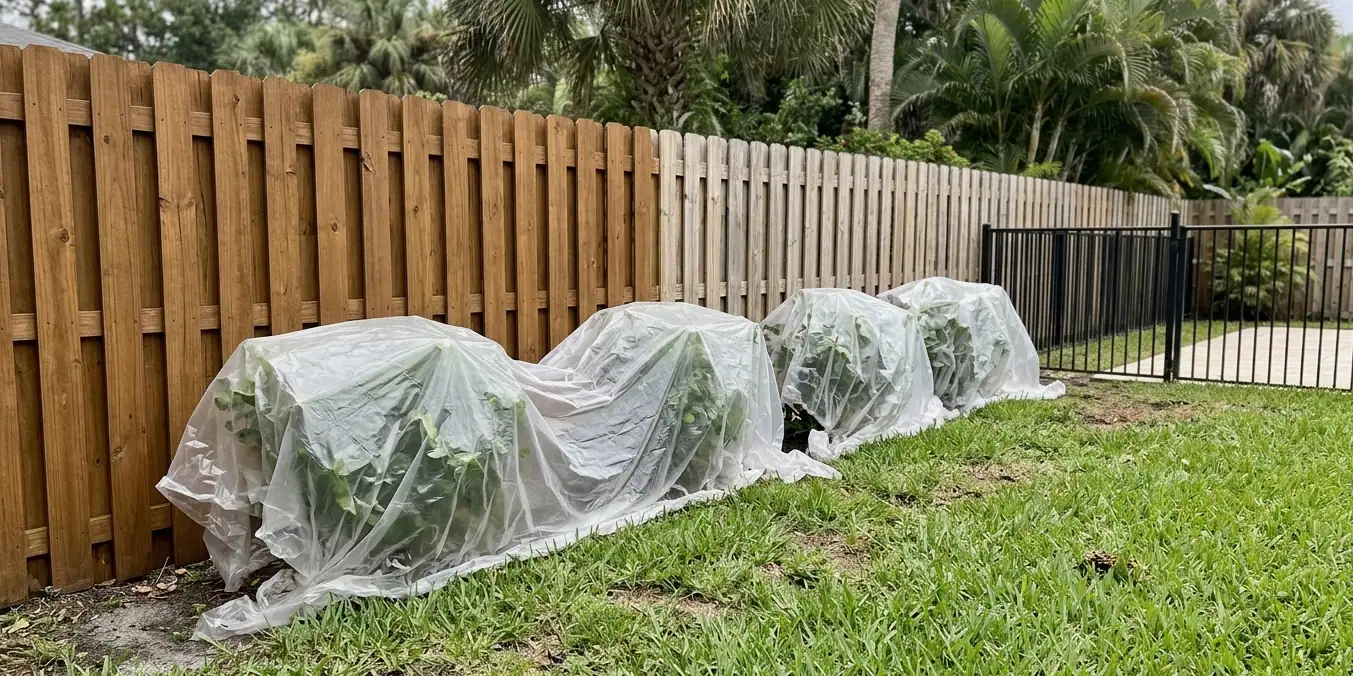
The three fences we see most
Around Wesley Chapel, fences come in three materials. Pressure-treated pine privacy fences, usually six feet tall in board-on-board or shadowbox style, line back yards in older sections and plenty of newer ones. Black or bronze aluminum picket fences surround pools and face the conservation areas. White vinyl shows up wherever an HOA has standardized the look.
Each needs a different approach. Wood gets stain or paint. Aluminum gets a wash, a bonding primer where the factory finish has worn through, and a direct-to-metal enamel. Vinyl is usually cleaned rather than coated, because a dark paint on vinyl can make the panels warp in direct sun.
Your side, their side
A fence has two faces, and the outside face is often your neighbor's view. We only coat the side you have access to unless your neighbor agrees ahead of time. When they are happy to have both sides done, doing it on the same visit usually saves money, and many neighbors split the cost.
If your community has an architectural review committee, check whether fence color is regulated. Many HOAs set a stain color or a natural finish for perimeter fences so the street side stays uniform, and we follow whatever your ARC approved.
Spray, brush or both
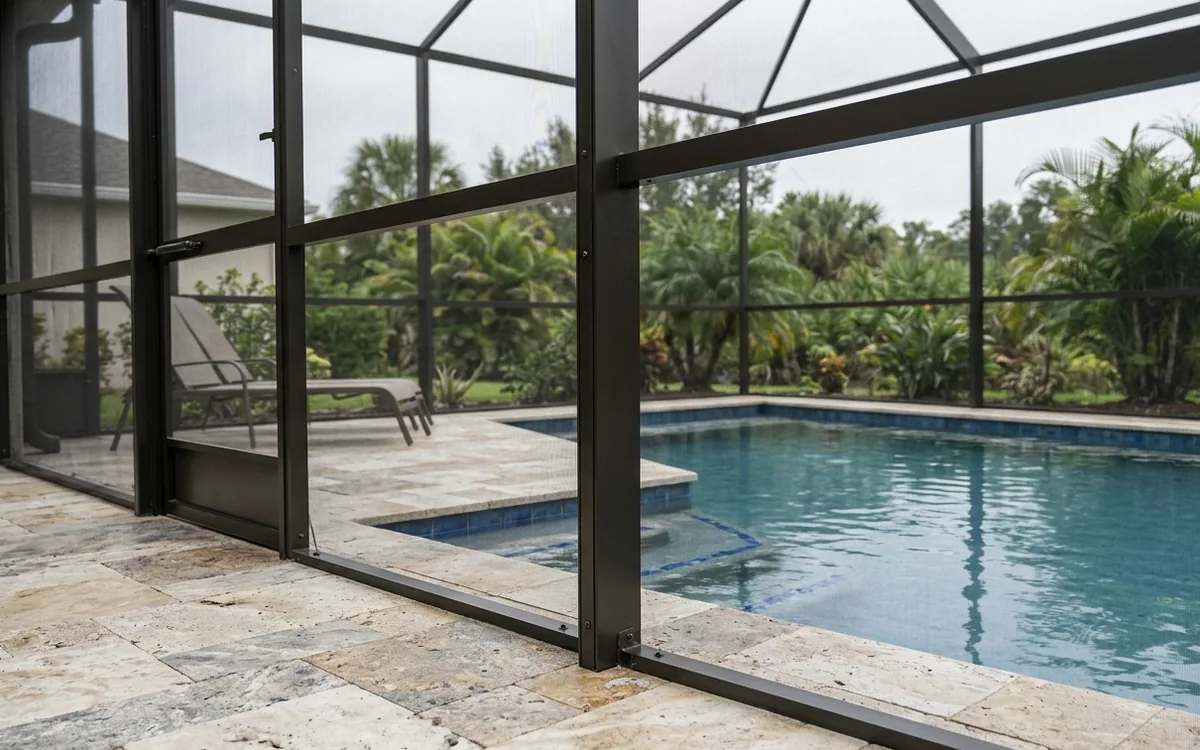
On a long run of fence, we spray the stain and back-brush it. Spraying reaches the gaps between overlapping boards and around the rails, and brushing pushes the stain into the grain so it does not sit on the surface. Plants, pavers, AC units and pool screen get covered with plastic and cardboard, and we stop spraying on gusty afternoons.
For aluminum, we wash off the chalky oxidation, sand spots where the powder coat has lifted, spot prime bare metal, then brush or spray the enamel. Posts near irrigation heads usually show the worst wear, often with orange iron stains from well water.
Making the finish last
Irrigation is the hidden fence killer here. A sprinkler that hits the bottom boards every night keeps them wet, which feeds mildew and soft rot at the base. Turn or adjust those heads before the stain goes on. Mulch piled against the boards does the same damage, so pull it back a few inches.
Rotted pickets and rails can be swapped before we coat, and a badly leaning post needs resetting first. A clean fence holds stain far better, so a pressure washing visit is often step one on an older fence.
Call us when you notice
- Pine boards have turned gray and are splitting at the ends.
- The fence darkens and soaks up water when sprinklers hit it.
- Aluminum pickets leave white powder on your hand.
- The bottom rail is green with algae or mildew.
- Your HOA sent a notice about fence appearance.
How a fence painting & staining job runs
Measure and check
We measure linear footage, note height and style, test the old finish and look for rot or loose pickets.
Settle the sides and color
We confirm which side or sides get coated and whether your HOA restricts the color.
Wash the fence
Wood gets a cleaner and gentle rinse. Aluminum gets a wash to remove oxidation and iron staining.
Protect and coat
Plants and screens are covered. Wood is sprayed and back-brushed, and metal is primed where bare, then enameled.
Final pass
We pull the plastic, look for missed gaps and drips, and clean any overspray from nearby surfaces.