Repair or replace: how we decide
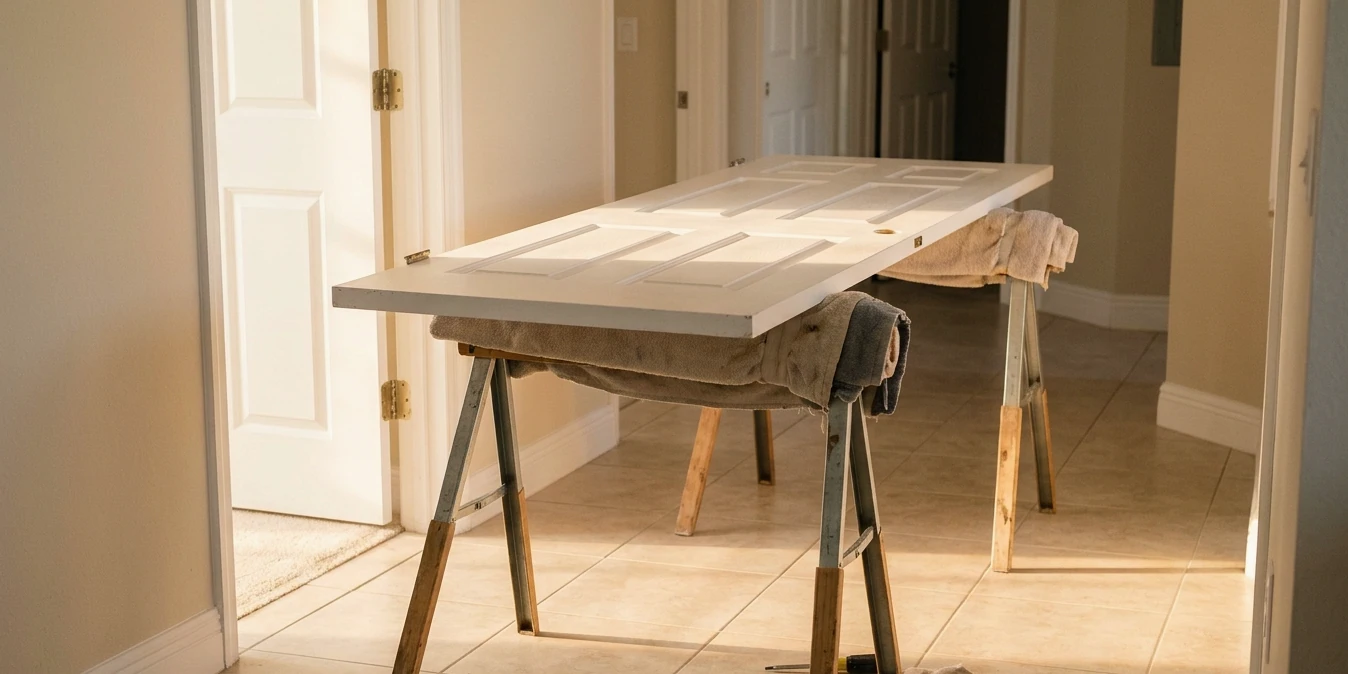
A door that rubs at the top corner usually needs adjustment, not a new slab. A door with a fist-sized hole in a hollow core, a split stile, or a bottom edge that swelled after a bathroom leak usually needs replacing. We check the slab, hinges, jamb and latch before suggesting either, and if repair is honest value we say so.
- Repair: loose hinges, sticking edges, latches that miss the strike, small dents and dings.
- New slab: holes, cracked panels, warped or swollen doors in a frame that is still square.
- Prehung unit: jambs that are split, out of square, or damaged by water at the floor.
Humidity and the summer stick
Wood and MDF doors take on moisture in July and August, and a door that closed fine in February can start dragging. The fix is often simple: tighten the hinge screws, swap one top hinge screw for a 3 inch screw that bites into the framing, and pull the door back into line. If the door still rubs, we plane the edge that binds and then seal it.
That last step matters. An edge planed and left bare soaks up even more moisture. We prime and paint the top and bottom edges as well as the sides, which builders often skip and which is why so many local doors swell to begin with.
Fitting a new slab to an old opening
Replacement slabs come without hinge mortises or a lock bore. We trace your old door, cut the hinge pockets with a router template, bore for the knob or lever, and trim the slab so the gaps run even all around. Over tile we leave enough clearance for the AC return air to pass under bedroom doors, about 3/4 inch, since many homes here have a single central return and closed bedrooms can otherwise starve for airflow.
Six-panel hollow core, smooth Shaker style and solid-core doors are all common choices. Solid core costs more but blocks sound far better, which people appreciate on a home office or a bedroom next to the living room.
Paint, hardware and the rest of the house
New slabs arrive primed and need finish coats. We spray or roll them in a semigloss to match your trim, and if the rest of your doors look tired beside the new one, interior door painting brings them all to the same sheen. When jambs are replaced, the casing usually comes off too, so pairing the job with new casing is easy at that point.
Call us when you notice
- The door scrapes the jamb or floor in humid months
- The latch will not catch without lifting the knob
- There is a hole or crack in a hollow core slab
- The bottom edge swelled after a bathroom or laundry leak
- A pet scratched through the paint and into the face
- Hinges squeak and the screws spin loose
How a door repair & replacement job runs
Diagnose
We check gaps, hinges, the latch and jamb square to see if the door needs adjustment, a slab or a full unit.
Tighten and align
Hinge screws are tightened or upgraded, and the strike is adjusted so the latch catches cleanly.
Plane or fit
Binding edges are planed, or a new slab is mortised, bored and trimmed to your opening.
Seal every edge
Top, bottom and sides are primed and painted so the door does not swell again next summer.
Hang and test
The door is hung with your hardware or new levers and opened and closed until it swings even.