Why builder paint gives out so early here
New homes along SR 54 and SR 56 usually get a contractor-grade flat white on every wall. It hides drywall seams well, but it burnishes when you rub it and a damp cloth takes the paint off with the scuff. After a few years of kids, dogs and a vacuum bumping the walls, the hallway looks tired even though the house is young.
Humidity makes it worse. When the AC cycles off during a summer power blip or while you travel, moisture settles on cool walls. Flat paint holds onto that film and the dust that comes with it, so bathrooms and laundry rooms gray out first.
Picking a sheen room by room
We rarely use one sheen through a whole house. The right choice depends on how the room is used and how much light skims across the wall.
- Living and dining rooms: matte or eggshell, which hides knockdown texture flaws.
- Hallways and kids' rooms: eggshell or satin for scrubbing.
- Bathrooms and laundry: satin with a mildew-resistant additive in the base.
- Great rooms with tall windows: a flatter finish so low sun across the wall does not show every patch.
Prep that decides how the walls look in year five
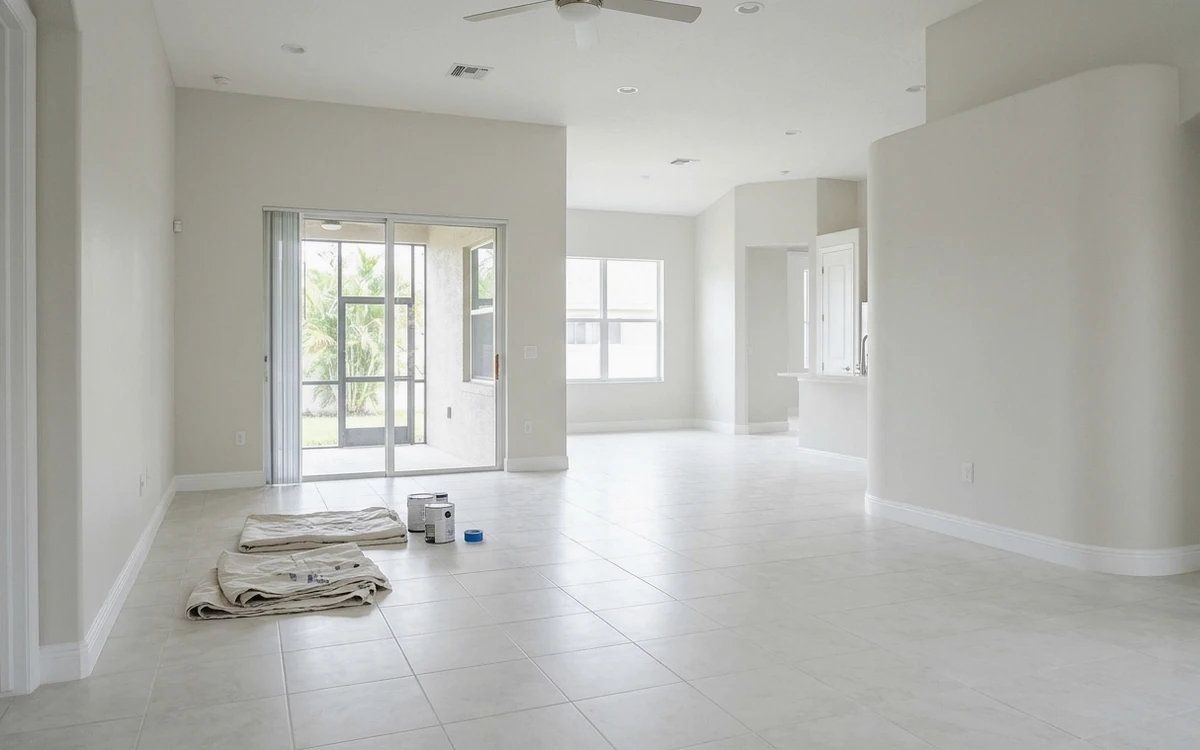
Painting is the fast part. Before a roller touches the wall we fill nail pops, which are common in the first few years as framing dries out, and we tape and mud any cracked corner bead. Bigger holes from wall-mounted TVs get a proper patch, and if the patch area is wide we match the knockdown so it disappears. Larger damage goes to our drywall repair crew in the same visit.
We spot-prime every repair. Skipping that step is why you see dull shiny patches, called flashing, on walls painted by someone in a hurry.
Living in the house while we paint
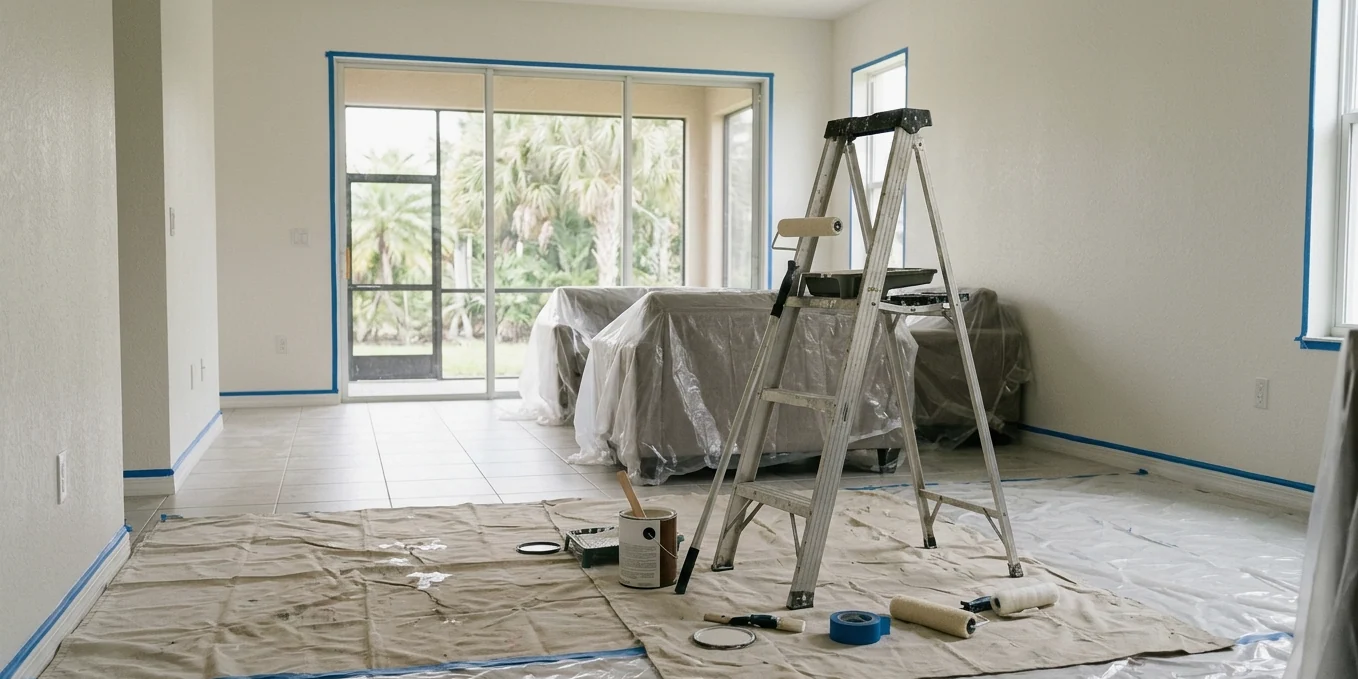
You do not have to move out. We work two or three rooms at a time, cover furniture in the middle of the room with plastic, and lay drop cloths over tile and LVP. Bedrooms are usually done and put back the same day, so nobody sleeps in a room that smells like paint. We use low-odor acrylics and keep the AC running so the paint cures evenly.
Call us when you notice
- Wiping a scuff leaves a shiny smear or a bare spot
- Nail pops dot the walls along the stairs or ceiling line
- You are tired of builder white in every room
- Bathroom walls look gray near the shower
- Patched TV mount holes show through the old paint
- You are getting the house ready to sell
How a interior house painting job runs
Walk the house together
We go room by room with you, note repairs, and agree on colors and sheens before writing the estimate.
Move and cover
Furniture goes to the middle of each room under plastic, and floors and outlets get covered.
Repair and spot-prime
Nail pops, dents and cracks are filled, sanded, and primed so the finish coat lays flat.
Cut in and roll two coats
Edges are brushed by hand, then walls are rolled in two full coats for even color.
Put the room back
We pull tape, reset covers and furniture, and walk the room with you before moving on.