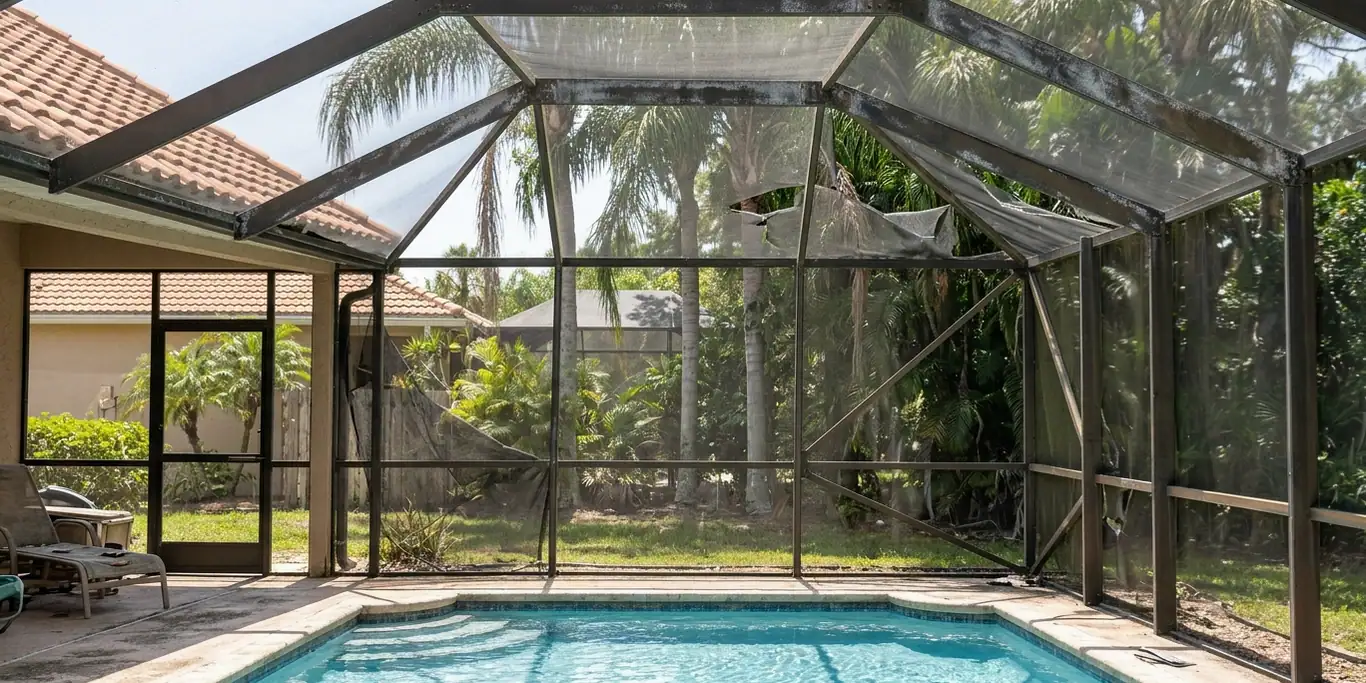
Two different problems on one structure
A pool cage has two parts that age on their own schedules. The aluminum frame, usually finished in bronze or white from the factory, slowly loses its coating to sun and weather. The screen mesh, typically a vinyl coated fiberglass, gets brittle, sags, tears and fades.
Painting fixes the frame. Rescreening fixes the mesh. Neither one fixes the other, so the first step is figuring out which part is actually letting you down. Walk the cage on a sunny afternoon and look at each separately.
Also look at what sits around the cage. Kick plates along the bottom, the screen door and its closer, the gutter where the cage meets the house, and the fasteners at the deck all age too. Loose screws, a dragging door or a sagging gutter are small fixes, but they are easier to handle while a crew is already on the cage. Make a short list as you walk so nothing gets missed on the estimate.
Signs the frame needs paint
Aluminum does not rust like steel, but it does oxidize. On a pool cage that shows up as a chalky, powdery surface that comes off on your hand, often lighter than the original color. It is the same process that dulls an old aluminum boat or patio chair. Bronze frames tend to fade toward a dull brown or purple tint. White frames turn gray and blotchy, and the chalk washes down onto the pool deck after rain.
- Chalk comes off on your hand or a dark rag.
- Color is noticeably lighter on the side that faces the afternoon sun.
- White pitting or fuzzy corrosion spots, especially near the bottom kick plates and where the cage meets the deck.
- Old paint peeling in strips from a previous paint job.
- Gray or black streaks running from fasteners.
Signs the screen needs replacing
Screens in our climate usually last somewhere around 8 to 15 years depending on exposure, pets and storms. Signs it is time:
- Tears, holes or panels pulled loose from the spline channel.
- Mesh that feels stiff or cracks when you press it.
- Screens that sag or bow out in the wind.
- Faded or blotchy mesh that makes the view look hazy.
- Several panels already patched from past storms.
- Bugs getting in even though no panel is open.
When you need both, and the right order
Many cages in Wesley Chapel subdivisions built in the late 1990s and 2000s need both at once. If so, the order matters. The best result comes from removing the old screen, cleaning and painting the frame while it is bare, and then installing new screen. Painting with old screen in place means masking every panel, and overspray or drips end up on the mesh.
If your screen is fairly new but the frame is chalky, a careful crew can paint with the screen in place, brushing and rolling along each member and masking the mesh edges. It is slower than spraying and takes more care, but it saves you from paying for screen you do not need yet. If the screen is shot and the frame looks fine, rescreen now and plan to paint in a few years, when the new screen is out again or by careful masking.
How pool cage painting is done
A paint job on aluminum lasts only as long as the bond underneath it. Proper pool cage painting starts with a thorough wash to remove chalk, pollen and mildew, followed by a light scuffing of oxidized areas and a bonding primer made for aluminum. Bare corrosion spots get extra attention. Then two coats of a finish made for metal go on, usually a high quality acrylic or a specialty coating in bronze or white.
Protecting the pool is part of the job. Crews cover the water, the deck, pool equipment and any furniture you leave out. If the deck needs work too, pair it with pool deck coating or paver sealing after the cage, so drips and overspray end up on surfaces that are about to be redone anyway.
What each option costs
For a typical Wesley Chapel cage over a pool and lanai, painting the frame alone generally runs about $2,140 to $4,380 depending on size, height and whether screen stays in place. Full pool cage rescreening with standard mesh usually lands around $2,690 to $5,170. Doing both together often saves some labor compared with two separate visits, since the screen only comes off once.
Large two-story cages, mansard roof styles and cages with heavy corrosion cost more. Choosing a premium screen, such as a heavier pet-resistant mesh on the lower panels or a no-see-um mesh, also raises the screen price. The final price always follows a free on-site look. Call (813) 471-5995, and we will tell you which part of the cage needs the money now and which can wait.