Why washing comes first
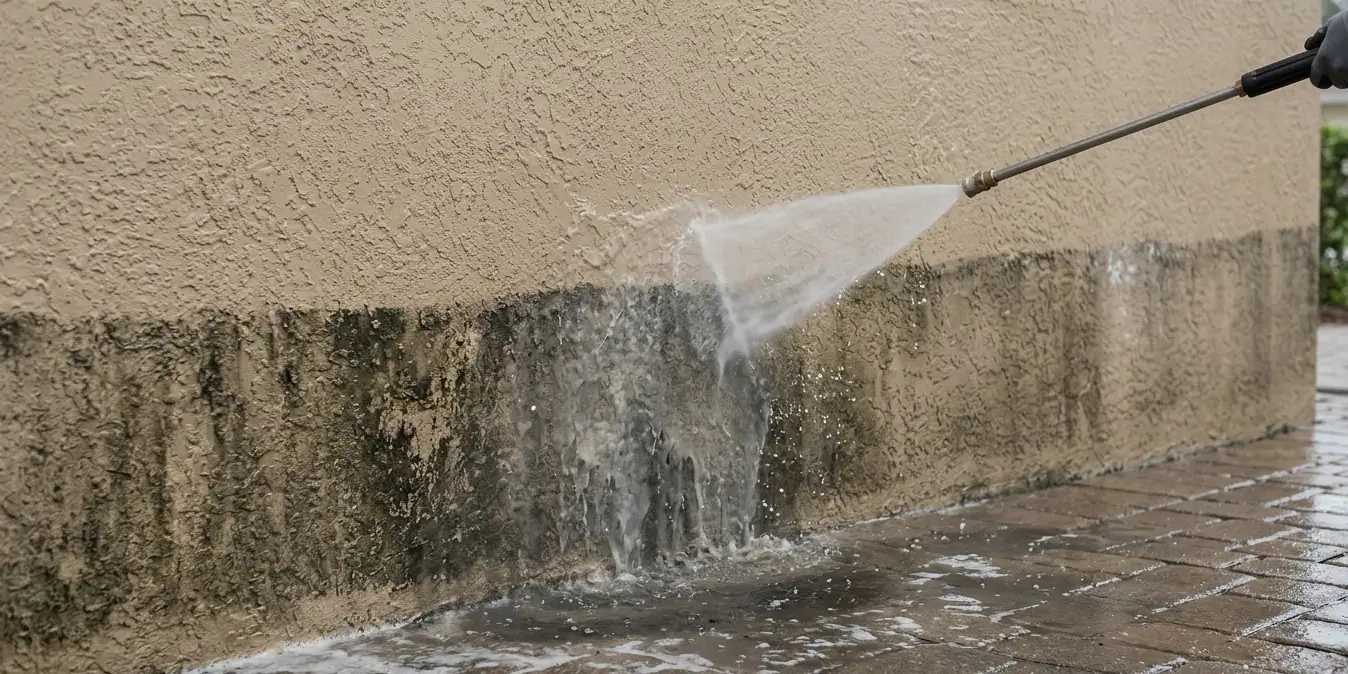
Paint bonds to whatever is on the surface. On a typical Wesley Chapel house that means chalk from old paint, a coat of pollen and dust, mildew on the shaded walls, and maybe red clay splash near the beds. Paint over that layer and it sticks to the dirt, not the stucco. When the dirt loosens, the paint goes with it.
A proper wash also shows you what you are dealing with. Hairline cracks, failing caulk and loose patches are easier to see on a clean wall, so the painter can fix them before painting instead of finding them later.
Florida adds a few extra layers that homeowners in drier places do not deal with. Oak pollen coats everything yellow in late winter and early spring. Love bugs leave acidic spots on light-colored walls in May and September. Irrigation with well water can stain the bottom of walls orange. Each of these needs to come off, and some need their own cleaner, before primer or paint goes on.
The chalky paint test
Try this on your sunniest wall. Rub your palm or a dark cloth firmly across the paint. If it comes back coated in fine powder in the color of your house, the paint is chalking. Light chalk is normal on older Florida paint. Heavy chalk that looks like you rubbed a stick of sidewalk chalk means the old film has broken down a lot.
Chalk has to come off before painting. Washing removes most of it. On heavily chalked walls, a crew may scrub with a cleaner and follow with a bonding primer so the new paint has something solid to grab.
Soft wash versus pressure washing
People say pressure washing for any kind of house washing, but on stucco the safer method is usually a soft wash. Here is the difference:
- Soft wash uses low pressure, close to a garden hose, with a cleaning solution that kills mildew and loosens dirt. The solution does the work and the rinse carries it away. It is gentle on stucco, paint, screens and window seals.
- Pressure washing uses high pressure, often 2,500 PSI or more, to blast dirt off. It is great for concrete driveways, pavers and some pool decks.
- Problem with high pressure on stucco: it can etch the surface, force water deep into cracks and behind window frames, and knock loose weak patches. That water can take days to dry and cause the new paint to blister.
- The right mix for most homes is a soft wash on the walls, eaves and lanai, and higher pressure only on flat concrete and pavers.
How long to let it dry
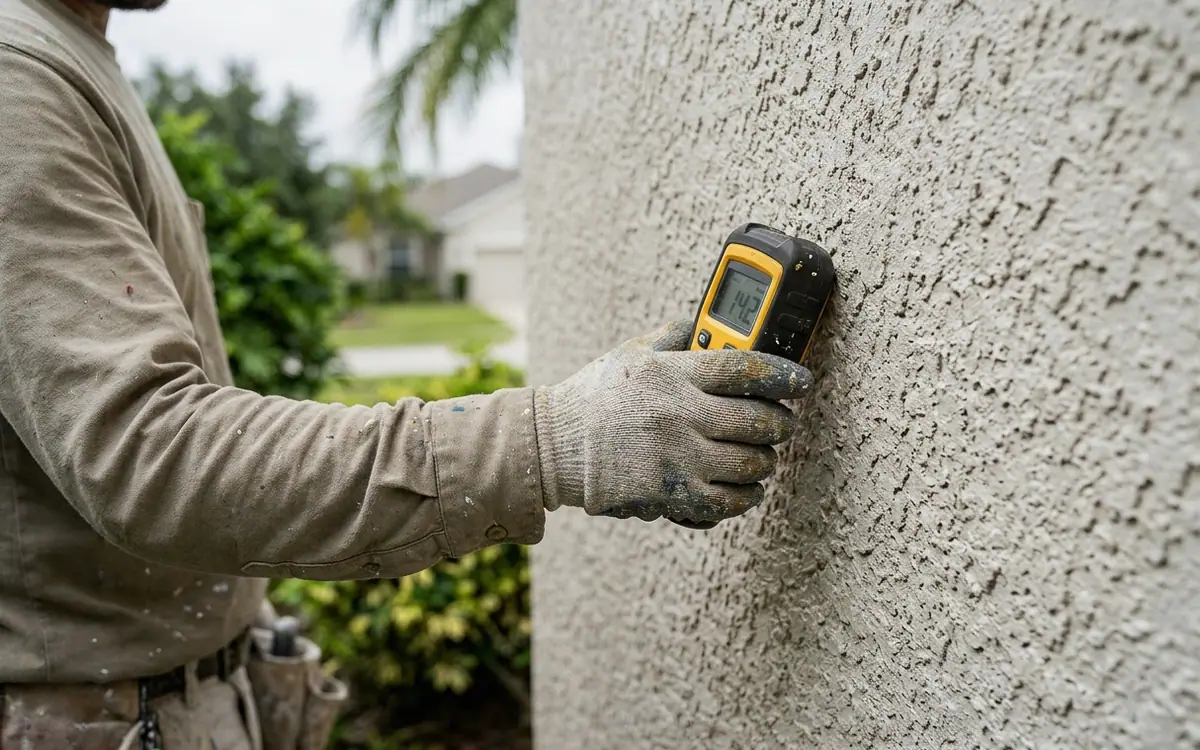
This is where a lot of paint jobs go wrong. Stucco is porous and soaks up water. A wall that looks dry on the surface can still be damp inside. In the dry season with sun and a breeze, most walls are ready in about 24 to 48 hours. In summer, or on shaded north walls, it can take longer, and afternoon storms can reset the clock.
A painter should check the surface before starting, ideally with a moisture meter, and at least by touch on several walls. Cool, dark or damp-looking spots mean wait. The bottom foot of the wall, where stucco meets the slab and sprinklers hit, is usually the last part to dry, so that is where we check first. Painting too soon can trap moisture, cause blistering and lead to early peeling, especially with thicker coatings like elastomeric.
What else should happen between washing and painting
After the wash, a careful crew will work through the house before any paint goes on:
- Scrape and sand any loose or peeling paint.
- Fill stucco cracks and patch damaged spots.
- Recaulk gaps around windows, doors, trim and penetrations.
- Spot prime bare stucco, patches and repaired wood.
- Mask windows, light fixtures, and cover plants and pavers.
Cost and how to plan the wash
When the wash is part of an exterior paint job, it is usually included in the price. A standalone soft wash for a single-story stucco home in our area typically runs about $285 to $545. Washing the driveway, walkways and pool deck with our pressure washing service adds roughly $165 to $390 depending on size. If your concrete tile roof is also streaked black, roof soft washing is a separate service that uses even lower pressure.
If you are planning to paint, ask your painter exactly how the house will be washed, what pressure they use on stucco, and how long they wait before painting. Call (813) 471-5995 for a free on-site look. We will check the chalk, the mildew and the stucco with you and give you a written estimate.