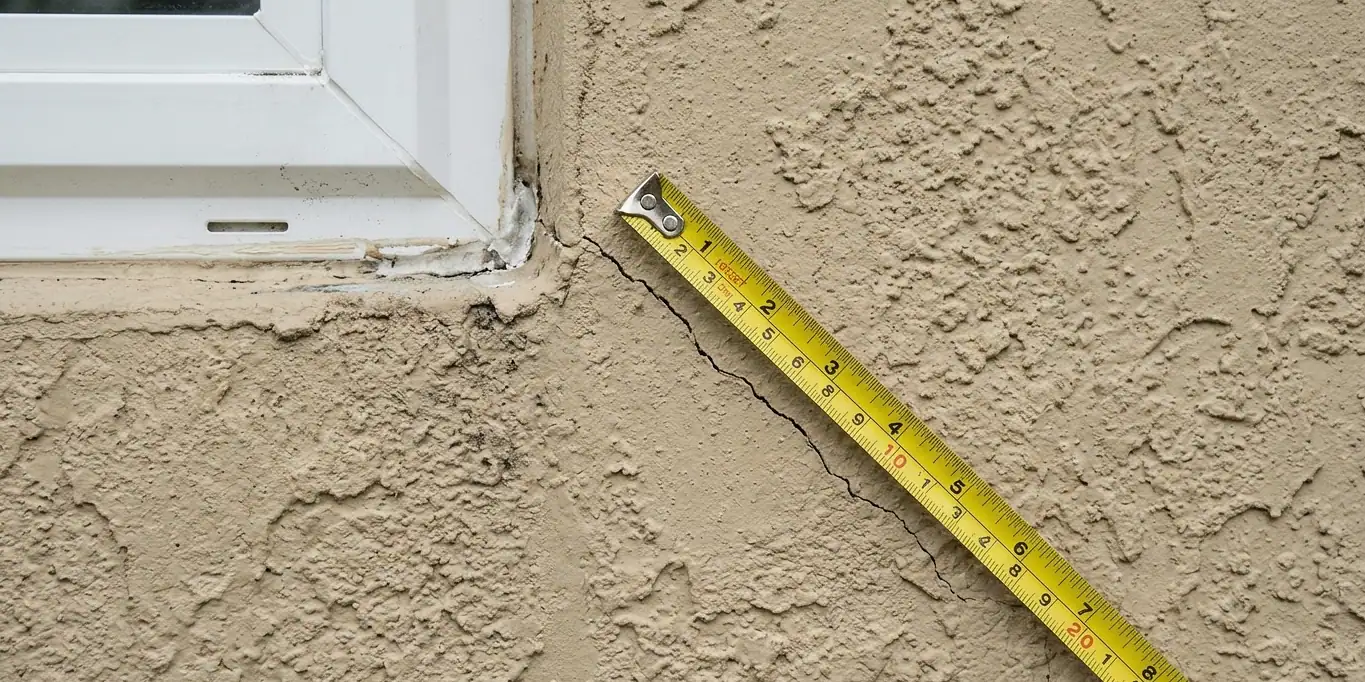
Why stucco cracks at all
Most homes in Wesley Chapel are concrete block with a cement stucco finish about 5/8 of an inch thick. Stucco is rigid. As it cures it shrinks a little, and after that it moves with every swing of heat and moisture. Block walls also settle slightly in the first few years after construction. Put those together and you get cracks, usually small ones, on nearly every house.
Cracks are not a sign that your builder did a bad job. They are a sign that you have stucco. What matters is the width, the pattern, where the crack sits, and whether it is growing.
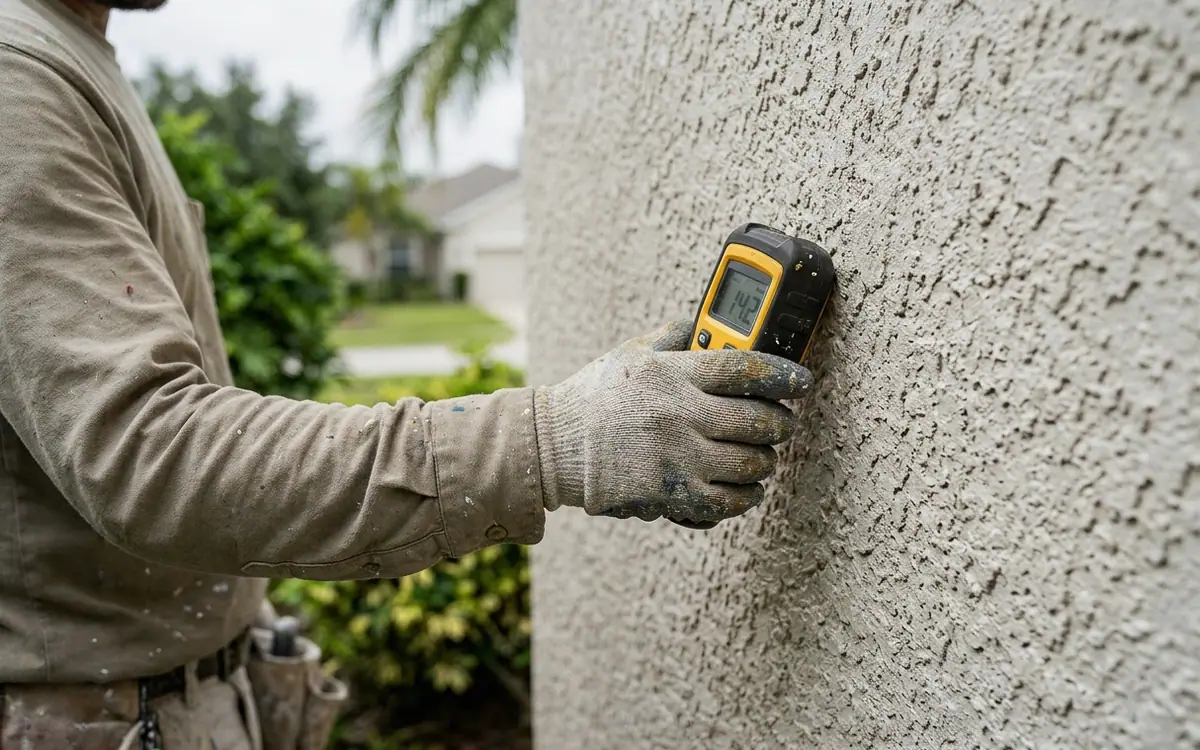
Florida weather speeds the process up. A west wall can reach well over 140 degrees on a July afternoon and then get hit with cool rain at 4 o'clock. That daily heat and soak cycle works on the stucco like bending a paper clip back and forth. Homes near retention ponds or on lots that were filled during construction can also see a bit more early settling, which tends to show up as cracks in the first three to five years.
Hairline shrinkage cracks
These are thin lines you can see but not catch a fingernail in, generally narrower than about 1/16 of an inch. They show up in the first year or two and often run in random directions across a wall. On their own they are cosmetic.
The catch is that even a hairline crack lets some water in during a sideways summer rain. Over years, that water can lift paint around the crack and stain the wall. A good repaint takes care of them: the crew fills or bridges the cracks before painting, and a thick acrylic or elastomeric coat keeps them sealed.
Map cracking
Map cracking, sometimes called crazing, looks like a spiderweb or a road map of fine lines over a large area. It usually comes from the stucco drying too fast when it was applied, which is common in Florida heat.
It looks alarming but is normally a surface issue. Pressing on the area should feel solid. If it sounds hollow when you tap it with a screwdriver handle, or pieces flake off, the stucco may have lost its bond to the block, and that needs a repair rather than just paint.
Cracks at windows, doors and corners
Diagonal cracks that start at the corner of a window or door and run outward at roughly 45 degrees are the most common crack pattern we see in Pasco County. Openings concentrate stress, so the stucco tends to give there first.
These deserve more attention than random hairlines, because they sit right next to the window frame where water already likes to collect. Check the caulk joint around the frame at the same time. If the caulk has split and the crack runs into it, rain can travel behind the stucco and into the wall cavity, and you may see swollen drywall or stained trim inside.
Cracks that need a closer look
Call for an inspection when you see any of these:
- A crack wider than about 1/8 of an inch, or one you can slip a credit card into.
- One side of the crack sits higher or further out than the other.
- A long horizontal or stair-step crack, especially low on the wall.
- Cracks that have grown noticeably since last year. Mark the ends with a pencil and date them.
- Stucco that sounds hollow, bulges or has chunks falling off.
- Rust stains bleeding from a crack, or water stains on the inside wall behind it.
- Doors or windows near the crack that suddenly stick.
Checking your walls and what repair costs
If you are not sure what you are looking at, try our free stucco crack checker. You answer a few questions about the width, pattern and location of the crack and it tells you whether it is likely cosmetic, worth sealing at the next repaint, or worth having someone look at now. It is a starting point, not a diagnosis, but it helps you decide whether to call.
For actual fixes, routing out and patching a handful of window-corner cracks and blending the texture typically runs about $385 to $940. Larger stucco repair, such as cutting out a delaminated section and rebuilding it, runs higher depending on size and height. Patches always need paint over them, so many homeowners combine crack work with stucco painting on that side of the house. The final price follows a free on-site look.
Call (813) 471-5995 if you want someone to look at a crack that worries you. We will tell you plainly whether it is normal or not.